How Monsoon Season Creates the Perfect Conditions for Mold Growth in Show Low AZ Homes
Most homeowners in Show Low think about mold as a problem for wetter climates. The assumption makes sense. Arizona is a dry state. What most people do not account for is what happens between July and September, when the North American Monsoon shifts the region's weather pattern dramatically and delivers concentrated, high-intensity rainfall that the soil, the structures, and the indoor environments around Show Low are not always prepared to absorb.
Monsoon season does not just bring rain to Show Low. It brings rapid humidity spikes, temperature conditions that accelerate organic growth, and a specific pattern of moisture intrusion into homes that creates exactly what mold needs to establish itself inside walls, crawl spaces, attics, and anywhere else where that moisture has nowhere to go.
RestorePro has been responding to mold and water damage in the Show Low area since 2005. The calls that come in during and after monsoon season follow a consistent pattern: a homeowner discovered something that looks like mold weeks after a storm, the moisture event that caused it happened quietly and out of sight, and the growth is further along than expected by the time anyone sees it. This guide explains why monsoon season creates that specific risk in Show Low homes and what to do about it.
What Makes Arizona Monsoon Season Different From Regular Rain
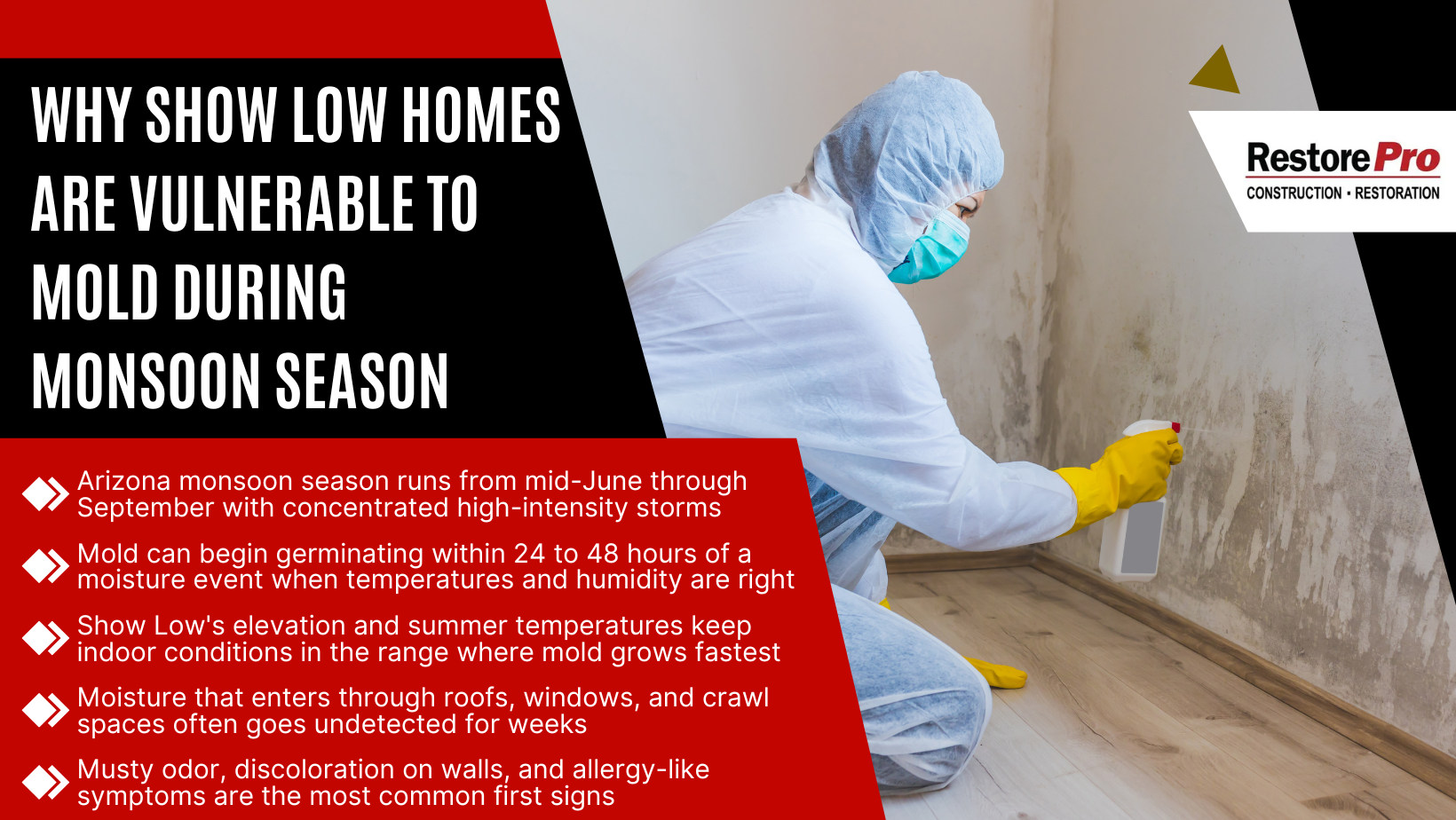
Arizona's monsoon is not a gradual weather shift. It is a distinct seasonal change in atmospheric circulation that brings moist air from the Gulf of Mexico and Pacific into a region that has spent months in dry, hot conditions. According to the NOAA National Weather Service Flagstaff office, northern Arizona receives concentrated thunderstorm activity during this period with amounts that vary widely from location to location within a short distance.
The Arizona State Climate Office confirms that monsoon thunderstorm activity accounts for roughly half of the annual precipitation in central and northern Arizona. For a region that is otherwise arid for most of the year, that means most of the year's total rainfall arrives in a ten to twelve week window, often in intense bursts that saturate surfaces quickly rather than allowing gradual absorption.
Show Low sits at approximately 6,300 feet elevation. That elevation plays a specific role in how monsoon moisture behaves indoors. Summer daytime temperatures at Show Low are cooler than the valley floor but still sufficient to create the warm, humid indoor conditions that accelerate mold growth. When a monsoon storm drives moisture into a structure through a roof penetration, a window seal, a crawl space vent, or a foundation crack, the building's thermal mass holds that warmth while the introduced moisture raises the local relative humidity to the range where mold can germinate.
The EPA documents that indoor relative humidity above 60 percent creates conditions where mold can germinate on organic surfaces, and that the ideal indoor range to prevent mold is between 30 and 50 percent. During and immediately after a monsoon storm in Show Low, indoor humidity in a home that has experienced any moisture intrusion can climb well above that threshold in the affected area.
The 24 to 48 Hour Window That Most Homeowners Do Not Know About
The most important fact about mold and monsoon moisture in Show Low homes is the timeline.
The EPA's mold guidance is direct on this point: if wet or damp materials are dried within 24 to 48 hours after a moisture event, mold will not grow in most cases.
If they are not dried within that window, the conditions for growth are established and remediation rather than prevention becomes the necessary response.
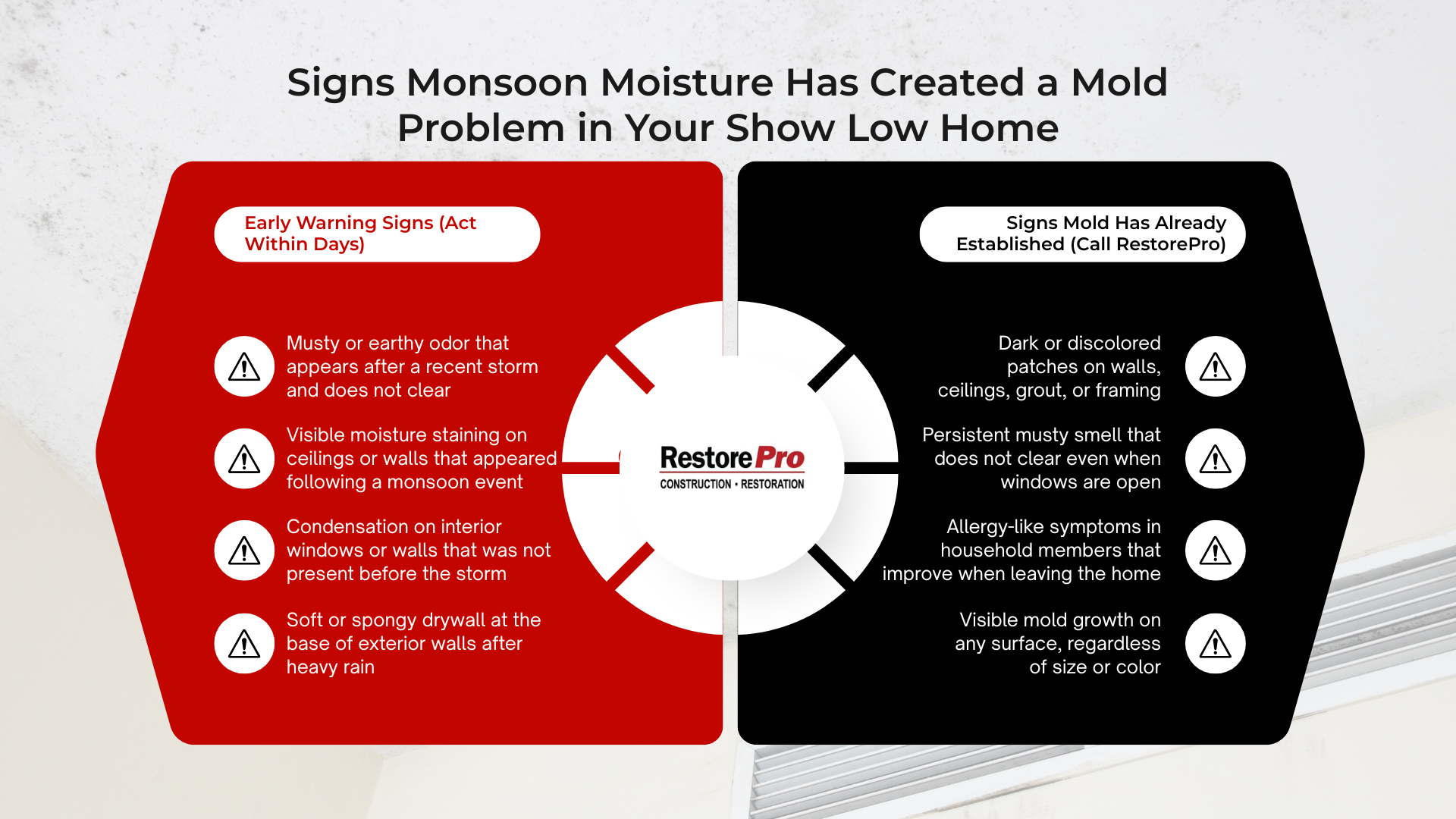
That window is what makes monsoon-related mold in Show Low homes particularly difficult to catch early. A storm moves through on a Tuesday evening. Some moisture enters through a roof flashing detail, a sliding glass door threshold, or a low crawl space vent. The visible surface dries within a day or two as temperatures return to normal. The homeowner sees nothing wrong. The moisture that found its way into the wall cavity, under the subfloor, or into the attic insulation does not dry on that same timeline. It stays wet. Within 48 hours, conditions for mold germination are met on the organic materials in contact with that moisture.
Three weeks later, the homeowner notices a smell. Or discoloration appears on a wall surface. Or someone in the household starts experiencing allergy-like symptoms that improve when they leave the house. By that point, mold has been growing for weeks in a location the homeowner cannot see.
| Timeline after monsoon moisture intrusion | What is happening inside the structure |
|---|---|
| 0 to 24 hours | Moisture is present on surfaces and within materials. This is the window where rapid drying prevents mold entirely. |
| 24 to 48 hours | Mold spores on organic surfaces in contact with moisture begin to germinate if humidity and temperature conditions are met. |
| 48 hours to 1 week | Active mold colony establishment underway in affected materials. Growth may not be visible from the surface. |
| 1 to 3 weeks | Colony growth progresses. Musty odor may become detectable. Discoloration may begin to show on surface materials. |
| 3 weeks and beyond | Mold is established and spreading. Surface symptoms are visible. Affected materials typically require professional remediation and removal. |
Where Monsoon Moisture Enters Show Low Homes
Understanding the specific entry points that monsoon storms exploit in Show Low homes is the starting point for both prevention and early detection.
Roof penetrations and flashing failures. The intense, wind-driven rain that characterizes monsoon thunderstorms at Show Low's elevation puts stress on roof flashing at chimneys, skylights, plumbing vents, and HVAC penetrations. Flashing that has aged, shifted, or was not installed to an adequate standard can allow water to enter the roof assembly during a storm even when the roof surface itself is intact. The moisture that enters through a flashing failure typically travels down into the attic or wall cavity before showing any surface sign.
Window and door seals. Horizontal driving rain during a monsoon storm hits window and door seals at angles that standard rainfall does not. Aged caulking at window frames, degraded door thresholds, and improperly sloped sill pans allow water to enter around the frame perimeter and into the wall cavity. The wall surface inside the home may show no discoloration for weeks while moisture works against the framing and insulation inside.
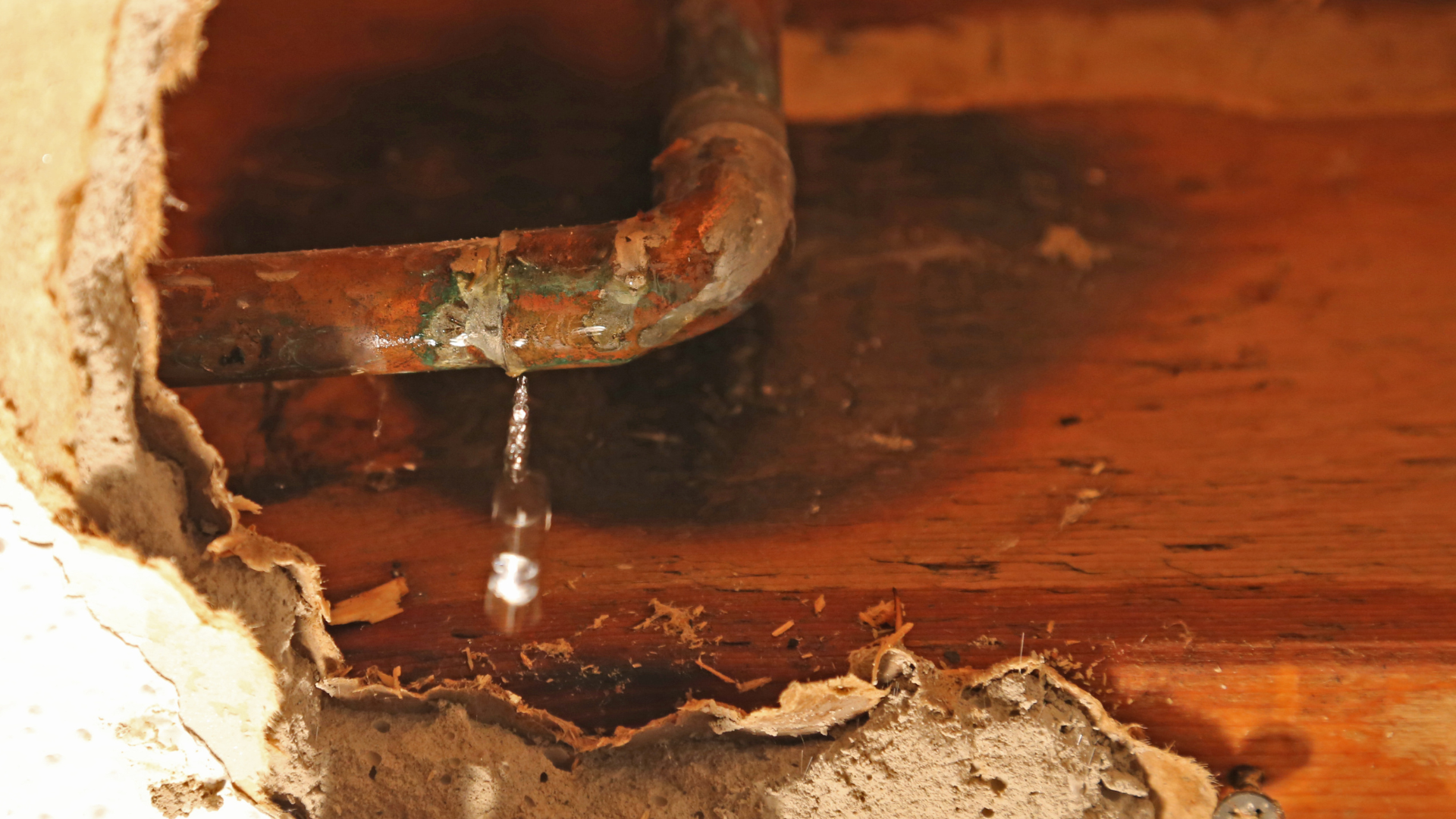
Crawl space vents and foundation openings. Homes in Show Low with crawl spaces are particularly vulnerable to monsoon moisture intrusion because crawl space vents that allow air circulation under normal conditions also allow wind-driven rain to enter during a monsoon storm. Water that enters the crawl space saturates the soil, raises humidity levels inside the crawl space to well above mold-growth thresholds, and wicks into the wood framing and subfloor above it.
Flat or low-slope roof sections. Many homes in the Show Low area have architectural elements with low-slope or nearly flat roof sections, such as covered porches, carport roofs, or addition roofs. These sections shed water more slowly than steep-slope roofs and are more vulnerable to water ponding during intense monsoon rainfall. Seam failures in low-slope roofing systems often allow water intrusion that is not detected until the interior ceiling or wall shows a stain.
HVAC condensate and duct issues. The rapid humidity increase during a monsoon event can cause condensation on air conditioning components, particularly on poorly insulated ductwork running through unconditioned attic space. That condensation, combined with any existing dust or debris on the duct surface or in adjacent insulation, creates a localized mold growth environment that can spread over weeks without being detected.
What Proper Mold Remediation Actually Involves
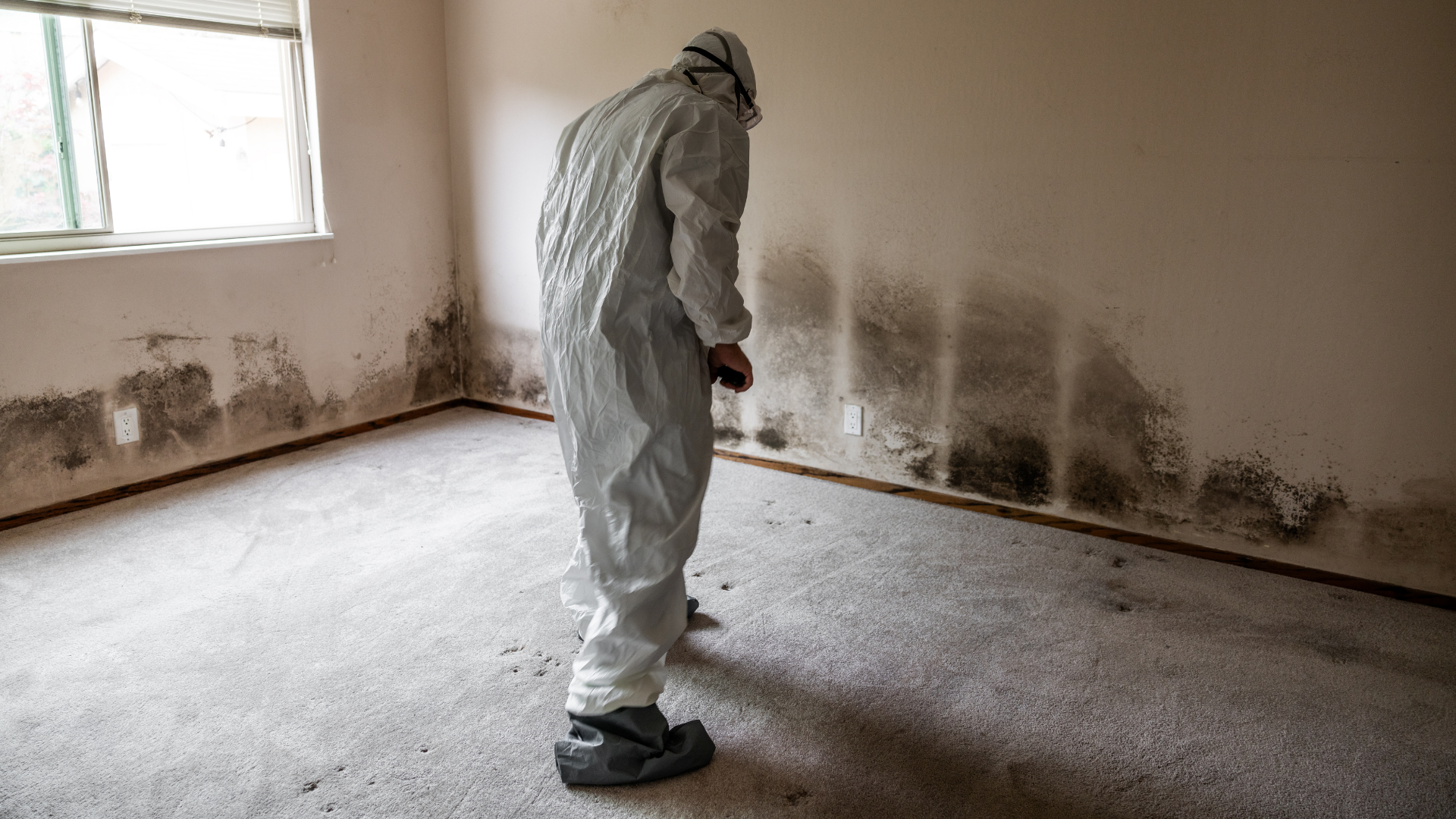
A homeowner who finds visible mold after a monsoon event in their Show Low home is not looking at a cleaning problem. They are looking at a remediation problem, and the distinction matters.
The EPA is explicit that the key to mold prevention is moisture control and that existing mold requires proper physical removal of affected materials in addition to addressing the moisture source. Cleaning visible mold with household products does not eliminate the mold colony. It addresses surface appearance while leaving the root structure and spores in the material, where growth resumes when moisture conditions return.
RestorePro's mold remediation process follows IICRC S520 standards and covers the full scope of what proper remediation requires:
Moisture source identification. Before any mold removal work begins, the moisture pathway that allowed the growth to establish needs to be identified and addressed. Mold remediation without source correction produces regrowth. RestorePro uses moisture meters, thermal imaging, and direct inspection to locate the entry point and confirm where moisture has traveled within the structure.
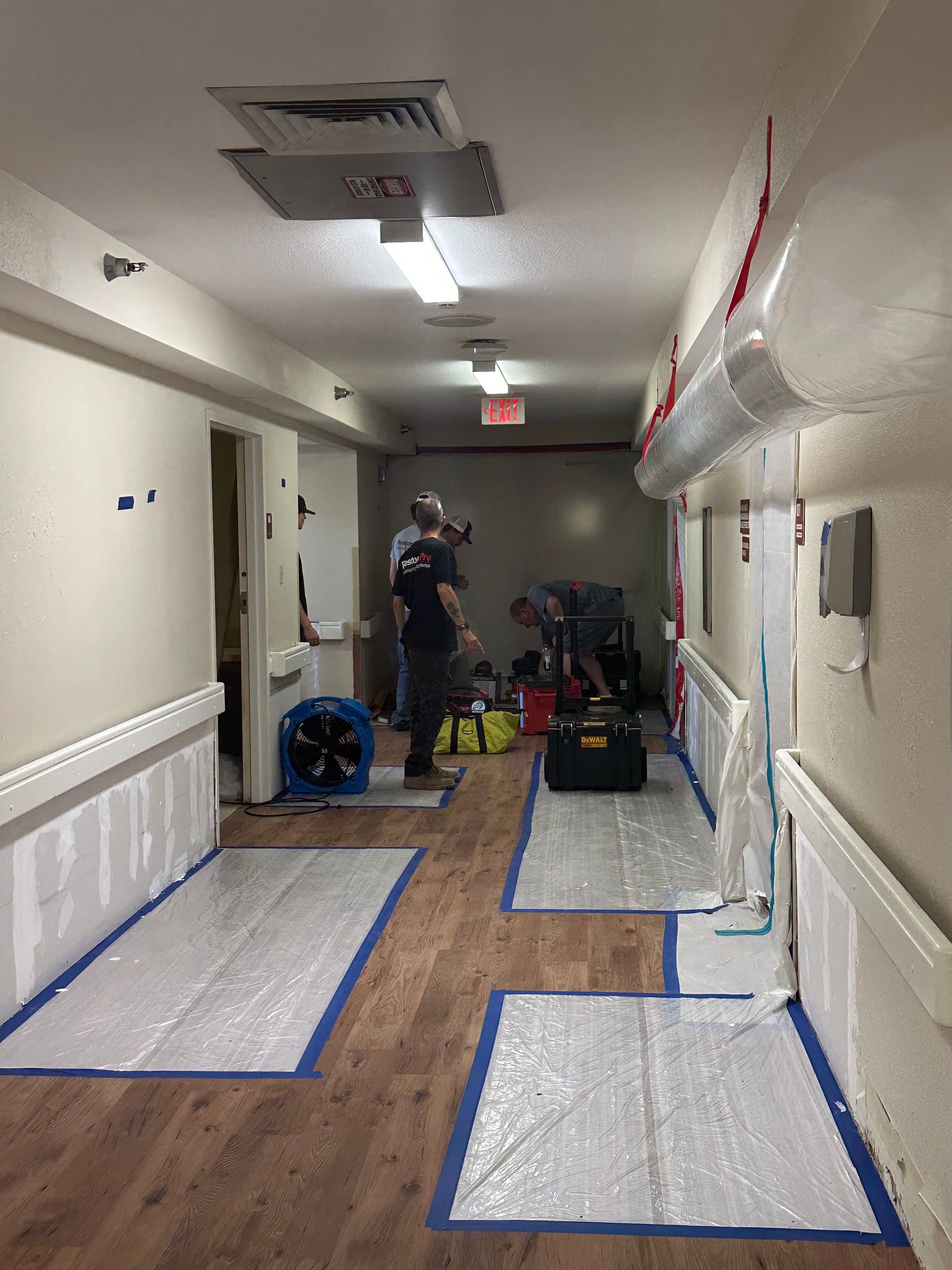
Containment. Affected areas are contained using physical barriers and negative air pressure to prevent mold spores from being disturbed during removal and spreading to unaffected areas of the home. This is particularly important in occupied Show Low homes where the rest of the living space needs to remain safe during the remediation process.
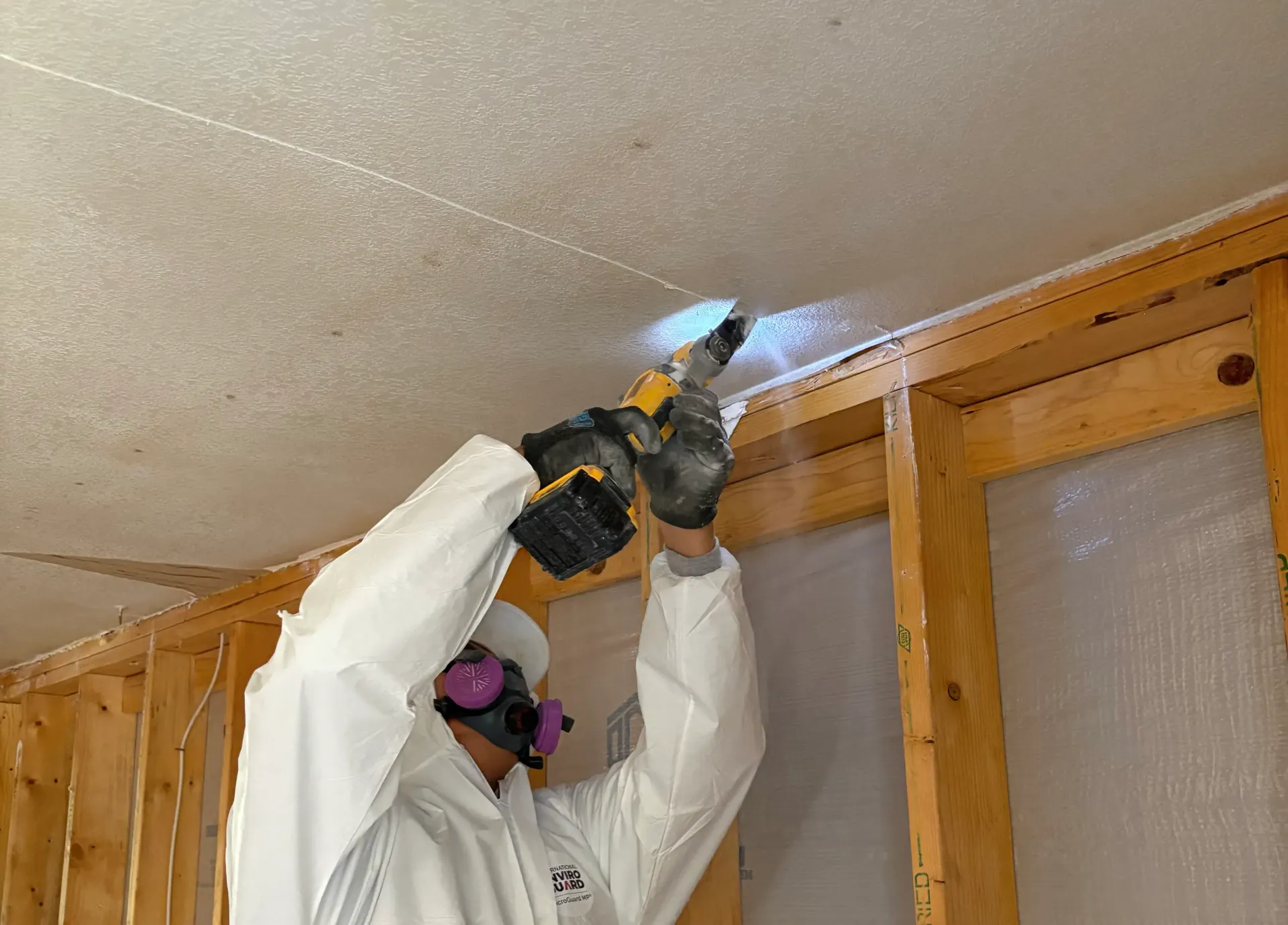
HEPA-filtered removal. Affected materials are removed and disposed of using HEPA-filtered equipment that captures mold spores rather than releasing them into the air. Drywall, insulation, and wood framing that has been infiltrated by mold growth beyond surface level typically requires removal rather than cleaning.
Antimicrobial treatment and air scrubbing. Remaining surfaces in the affected area are treated with antimicrobial agents and air quality is restored using HEPA air scrubbers that capture airborne spores throughout the remediation process.
Post-remediation verification. RestorePro confirms that the remediation is complete and that air quality in the affected area has returned to an acceptable level before the area is closed and reconstructed. Post-remediation verification is what separates a properly completed remediation from one that leaves residual risk.
Reconstruction. Once the mold remediation is complete and verified, RestorePro's licensed construction crews handle the rebuild. Drywall replacement, insulation installation, painting, and any structural repairs that are needed as part of restoring the space are completed by the same team. The homeowner works with one company from the first call through the final walkthrough.
For a related look at how water damage and mold are connected following a monsoon event, RestorePro's water damage restoration page explains the water damage response process that prevents mold from establishing in the first place.
Insurance Coverage and Monsoon Mold Claims in Arizona
Whether homeowner's insurance covers mold remediation after a monsoon event in Show Low depends on the specific policy language and the documented cause of the moisture intrusion.
In general, standard homeowner's insurance policies cover sudden and accidental water damage, including damage from wind-driven rain entering through a compromised roof or window during a storm. Mold that develops as a result of that covered water event may be included in the claim. Mold that develops as a result of gradual moisture intrusion, deferred maintenance, or conditions that existed before the storm is typically excluded.
Documentation is everything in a monsoon-related mold claim in Arizona. RestorePro documents moisture levels, affected areas, and the progression of damage from the first day of assessment. That documentation is what supports the insurance claim and what the adjuster needs to connect the mold growth to the storm event rather than to a pre-existing condition.
RestorePro has extensive experience working alongside insurance adjusters on restoration claims in the Show Low area. The team can assist with documentation, answer adjuster questions directly, and help homeowners understand what their policy covers before any decisions are made about scope or materials. More information on the insurance claim process is available on RestorePro's insurance page
From the First Call Through the Final Walkthrough
RestorePro serves Payson, Show Low, Snowflake, Winslow, and the surrounding Northern Arizona communities with 24-hour emergency response for water damage, fire damage, storm damage, and mold remediation. Because RestorePro is a licensed general contractor with family contracting roots dating back to 1961, the team that responds to the emergency is connected to the team that manages the insurance documentation and ultimately rebuilds the structure.
One company. One point of contact. One team from the emergency call through the final walkthrough.
The homeowners who navigate property damage claims in Northern Arizona most successfully are not the ones who called their insurance company first. They are the ones who called a licensed restoration professional first, documented everything before cleanup began, understood their Arizona policyholder rights before accepting a settlement, and had a complete professional scope to compare against the adjuster estimate before signing anything.
Frequently Asked Questions
How quickly can mold grow after a monsoon storm in Show Low?
According to the EPA, mold can begin germinating on wet organic materials within 24 to 48 hours when temperature and humidity conditions are met. Show Low's summer temperatures during monsoon season fall within the range where mold grows fastest. Moisture that enters a structure during a monsoon storm and is not dried within that window creates conditions for mold establishment within days, even when no visible signs appear for weeks.
Can I clean mold myself after a monsoon event?
For very small, isolated surface mold on non-porous materials, basic cleaning may be sufficient. For any mold growth on porous materials including drywall, wood framing, insulation, carpet, or subfloor, professional remediation is the appropriate response. These materials absorb mold growth below the visible surface, and cleaning the surface without removing the affected material leaves the colony in place. The EPA recommends professional remediation for mold covering more than 10 square feet, and for any mold growth that followed a significant water event.
What should I do immediately after a monsoon storm if I suspect moisture got into my home?
Inspect the areas most vulnerable to monsoon intrusion: attic access points, crawl space vents, the base of exterior walls, window sills, and ceiling surfaces beneath the roof. Look for visible moisture, staining, or soft drywall. If any moisture is confirmed, contact RestorePro immediately. The 24 to 48 hour window for preventing mold after a moisture event is narrow, and professional drying equipment works significantly faster and more completely than household fans or open windows.
How do I know if the smell in my home is mold from monsoon moisture?
A musty or earthy odor that appears or intensifies during and after monsoon season, particularly in specific rooms or areas of the home, is a consistent indicator of mold or accumulated moisture. If the odor clears when you open windows in dry weather and returns when humidity rises, that is a sign of moisture-related growth rather than a cleaning issue. RestorePro can conduct a professional mold assessment to identify whether growth is present and where.
Does RestorePro handle both the mold remediation and the rebuild in Show Low?
Yes. RestorePro provides certified mold remediation following IICRC S520 standards and then handles the complete reconstruction of affected areas through the company's licensed construction crews. This means drywall replacement, insulation, framing repair, and painting are all completed by the same team without the homeowner coordinating separate contractors. One company, from the first call through the final walkthrough.
Will my homeowner's insurance cover mold remediation after a monsoon storm?
Coverage depends on the policy language and the documented cause of the moisture intrusion. Mold that resulted from a covered water event such as wind-driven rain entering through storm-damaged roofing or windows is typically covered. Mold from gradual or maintenance-related moisture is typically excluded. RestorePro assists with documentation and insurance coordination from day one of the assessment to give homeowners the strongest possible foundation for a claim.
Whether you have found mold after a recent monsoon storm, noticed a persistent odor that started during monsoon season, or want to have a professional assess your Show Low home for moisture vulnerabilities before next season begins, RestorePro provides emergency response, expert mold remediation, and complete rebuilding services. From the first call through the final walkthrough, one team handles the full scope of the restoration.
Recent Posts



RESTOREPRO
Is Your Property Damaged Right Now? Do Not Wait.
Every hour without professional mitigation means more structural damage and higher repair costs. Whether you are dealing with standing water, fire residue, or visible mold growth, the fastest decision you can make is calling a team that is already on the way. RestorePro has certified crews on call across Payson, Show Low, Snowflake, and Winslow, ready to respond within 30 minutes of your call.