What Can Be Saved After a House Fire? A Guide for Northern Arizona Homeowners
What Snowflake Homeowners Should Check Before Monsoon Season Ends
For estimated 2026 market context, Angi's July 2026 asbestos testing data puts professional testing at about $231 to $776, with an average around $483. Angi's asbestos testing cost guide notes that home size, number of samples, access, and laboratory analysis affect the final cost.
For removal, Angi's
August 1, 2026 cost update reports approximately
$1,215 to $3,283 for many indoor abatement projects, with an overall average around
$2,248 and a broader range that can extend from several hundred dollars to more than $6,000 depending on the project. Angi's 2026 asbestos removal guide also gives an estimated
$5 to $20 per square foot for many interior removal situations. Use these figures as early budgeting context until the actual material, area, access, and containment scope are known.
Estimated 2026 Market Context
After the fire department leaves, homeowners often face belongings that look permanently ruined. The answer to what is salvageable after a house fire is rarely obvious from appearance alone. An item may be coated in soot but sound, while another may look intact despite hidden heat, water, or corrosion damage. A reliable decision considers the material, exposure, contamination, value, and available treatment.
That evaluation matters in Show Low, Payson, Heber, Winslow, and Snowflake, where fire can affect clothing, documents, electronics, furniture, and photographs. RestorePro provides content inventory, pack-out, cleaning, deodorization, and secure storage during fire and smoke damage restoration. This guide explains what may be recoverable, what should be discarded, and how to protect safety and claim documentation.
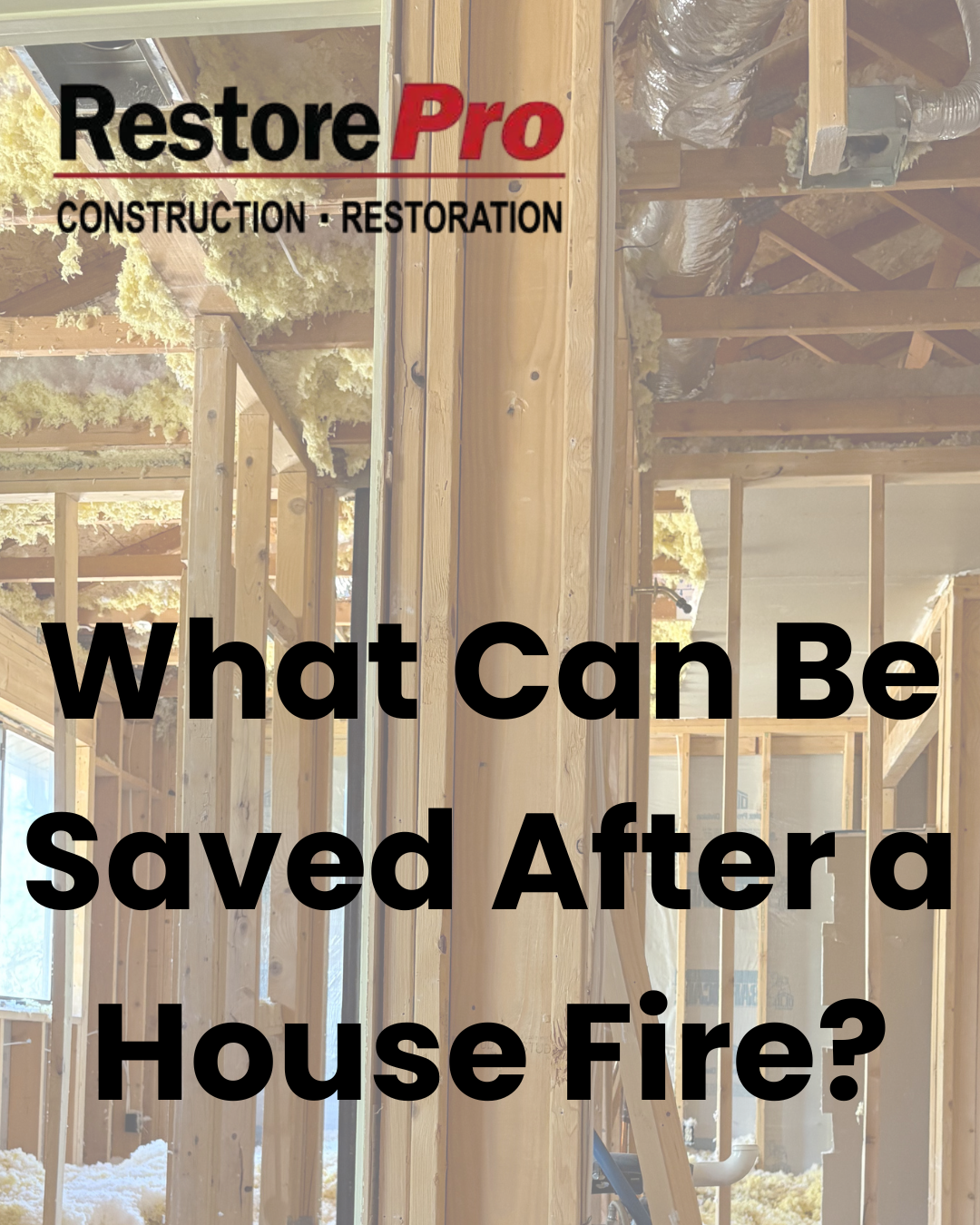
Put Safety Before Salvage Decisions
Do not enter a fire-damaged home until the fire department or other responsible authority says it is safe. Floors, ceilings, electrical systems, gas lines, and structural components may remain unstable after flames are out. The American Red Cross advises people to stay out until local fire authorities approve re-entry and to discard food exposed to heat, smoke, or soot. Even a small fire can spread residue into rooms that never had visible flames.
Once entry is allowed, avoid touching or moving more than necessary before the property and contents are documented. Do not switch on appliances, electronics, ceiling fixtures, or HVAC equipment exposed to fire, smoke, heat, or suppression water. Household cleaning can smear soot, drive oily residue deeper into porous surfaces, or mix contaminants in ways that make professional cleaning harder. Wear any protective equipment recommended by the restoration team and keep children and pets outside affected areas.
What Determines Whether an Item Can Be Saved?
No single rule applies to every belonging. A restoration specialist considers how close the item was to the fire, what burned, how long smoke circulated, whether water reached it, and how the material responds to cleaning. Sentimental and replacement value also matter because a technically restorable item may cost more to clean than replace, while an irreplaceable photograph may justify specialized treatment.
The main decision factors include:
- Heat and flame exposure: Charring, melting, warping, or lost strength can make restoration unsafe.
- Soot type: Protein, synthetic, wood, and cooking fires produce different residues and odors.
- Porosity: Glass and finished metal clean more readily than foam, padding, unfinished wood, or paper.
- Suppression water: Water can cause swelling, corrosion, delamination, microbial growth, and contamination.
- Response time: Soot and moisture continue damaging materials after the fire.
- Health and safety: Food-contact, medical, personal-care, and infant items require conservative decisions.
- Economic and personal value: Compare cleaning and replacement while accounting for sentimental importance.
- Insurance requirements: Photographs, inventory, estimates, or approval may be required before disposal.
| Condition | More favorable for restoration | More favorable for replacement |
|---|---|---|
| Heat exposure | No melting, warping, charring, or loss of strength | Burned, brittle, distorted, or structurally weakened |
| Soot exposure | Light residue on a cleanable, stable surface | Heavy oily residue inside porous or inaccessible areas |
| Water exposure | Promptly dried with no swelling or contamination | Saturated, delaminated, moldy, or sewage-contaminated |
| Material | Glass, metal, sealed wood, washable textile | Foam, particleboard, open-cell padding, absorbent composites |
| Function | Decorative item that can be fully cleaned | Safety-critical, electrical, food-contact, or medical item |
| Value | High replacement, sentimental, or historical value | Low replacement value and high restoration cost |
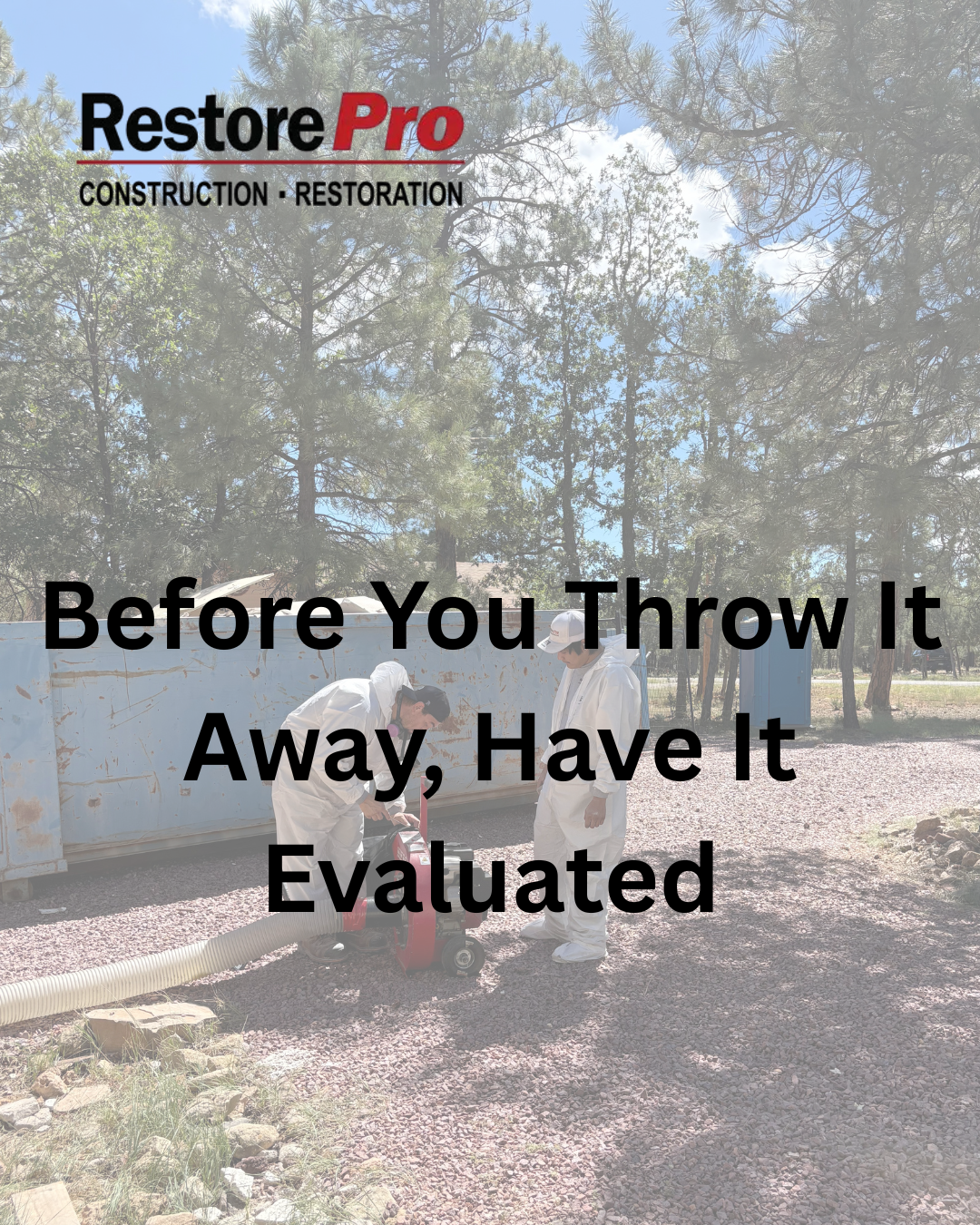
Belongings That May Be Good Candidates for Restoration
Many fire damaged belongings deserve evaluation before disposal. Furniture, clothing, electronics, photographs, and documents may be restorable when handled promptly. The category alone does not determine the outcome, so inspection should come before a blanket decision.
Items often worth evaluating include:
- Hard, nonporous items: Glass, ceramic, stone, and some metals may respond well when not cracked or heat-damaged.
- Solid wood furniture: Finished wood may be cleaned if joints remain strong and charring is absent.
- Clothing and linens: Specialized textile cleaning may remove residue and odor, depending on fabric and exposure.
- Rugs and upholstery: Sound frames and fibers may be treatable, while contaminated padding may need replacement.
- Photographs, books, and documents: Specialists may separate, dry, clean, digitize, or stabilize important items.
- Artwork and keepsakes: Material-specific conservation can sometimes recover pieces that ordinary cleaning would damage.
- Electronics and appliances: A qualified specialist may assess cleaning and repair potential, but exposed equipment must remain powered off until cleared.
The Smithsonian’s family valuables salvage guide explains that wet photographs, documents, textiles, and heirlooms can sometimes be stabilized with material-specific methods. Avoid experimenting on irreplaceable items because rubbing, stacking, heat drying, or household chemicals can set damage. Move affected contents only when the site is safe and the restoration or insurance team approves.
What Usually Should Be Discarded After a Fire?
Some contents should not be saved because smoke, heat, chemicals, or water may compromise safety without visible damage. Follow fire-authority guidance, product instructions, the insurance process, and professional assessment. Do not use or donate questionable items because their packaging looks closed.
Common discard categories include:
- Food exposed to heat, smoke, soot, or firefighting chemicals, particularly in permeable packaging.
- Medicines and medical supplies exposed to heat, smoke, water, or uncertain conditions.
- Cosmetics and personal-care products with potentially affected packaging, seals, or contents.
- Baby bottles, nipples, pacifiers, and feeding items that cannot be verified as safe after exposure.
- Severely burned, melted, charred, or structurally weakened belongings that cannot perform their original function safely.
- Mattresses, pillows, foam, and heavily contaminated soft goods when residue or odor has penetrated beyond reliable cleaning.
- Electrical cords, batteries, devices, and appliances that a qualified professional determines are unsafe or uneconomical to repair.
- Porous kitchen items such as wood cutting boards or plastic utensils when heat or contamination may have penetrated them.
| Item category | Why caution is necessary | Recommended next step |
|---|---|---|
| Food and beverages | Packaging may not block heat, smoke, soot, or chemicals | Discard according to public-safety guidance |
| Medicine and cosmetics | Heat and contamination can affect safety or stability | Replace and ask a pharmacist when uncertain |
| Infant feeding items | Residue may remain in small openings or porous materials | Replace unless an authority confirms safe reuse |
| Charred furniture or framing | Fire may have reduced structural strength | Have it assessed and replace unsafe material |
| Wet foam and padding | Deep contamination and slow drying can persist | Evaluate promptly, with replacement often safer |
| Exposed electrical equipment | Hidden corrosion or damaged insulation can create hazards | Keep powered off for qualified evaluation |
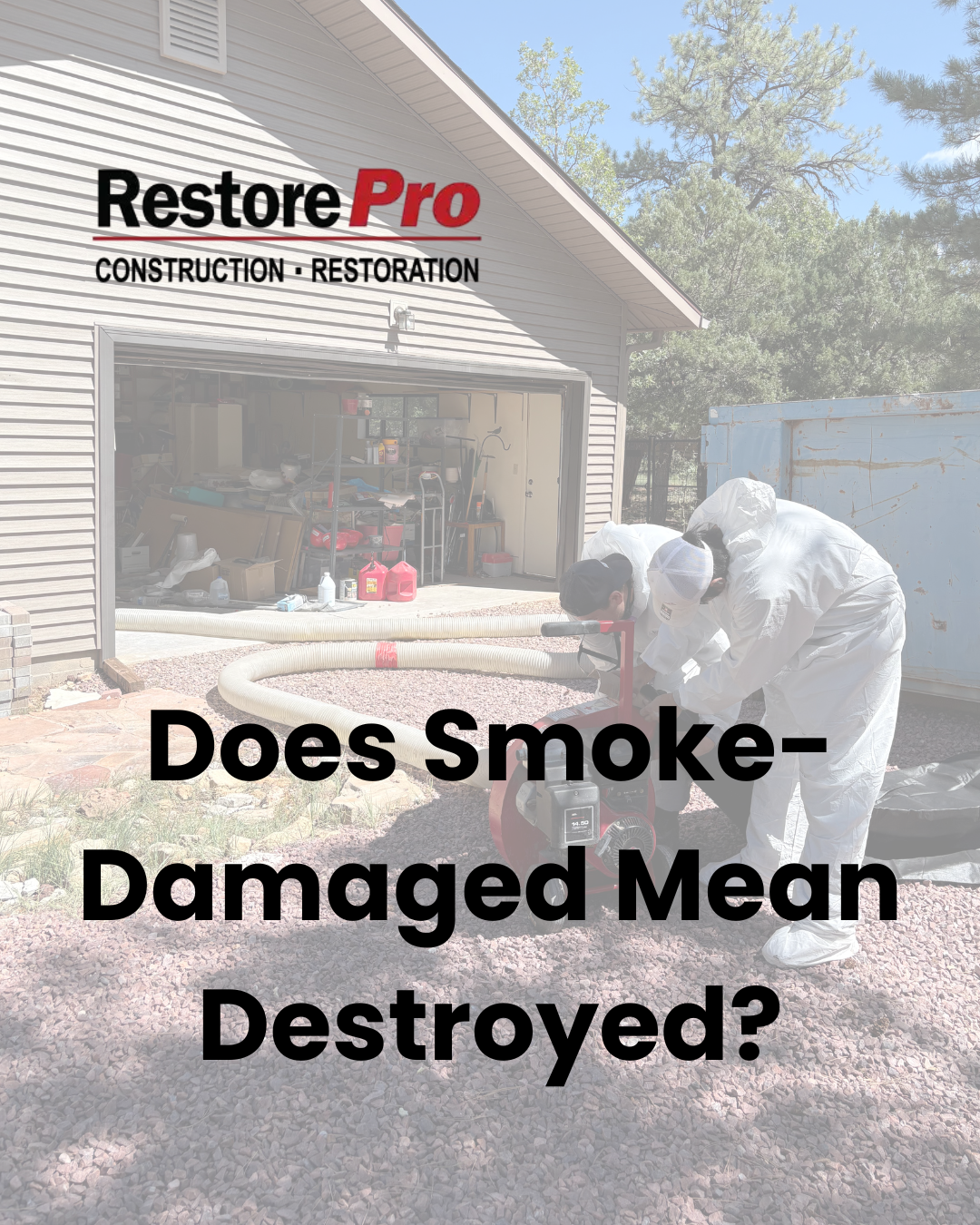
How Fire, Smoke, Soot, and Water Affect Materials
Fire damage is not limited to whatever burned. Heat can weaken adhesives, deform plastics, crack finishes, and alter electrical insulation, while soot can settle inside cabinets, equipment, fabrics, and ventilation pathways. Smoke odor compounds penetrate porous materials at different depths depending on temperature, air movement, and what burned. RestorePro’s Northern Arizona restoration overview explains that soot can travel through HVAC systems while suppression water remains trapped beneath floors and inside walls.
Water introduces a second clock because paper sticks together, wood swells, metals corrode, dyes transfer, and absorbent materials can support microbial growth. Dry-looking surfaces may conceal moisture inside upholstery, drawers, wall cavities, or layered flooring. Northern Arizona’s elevation, winter temperatures, and seasonal weather can affect access and drying conditions, but the actual moisture readings determine the plan.
Contents restoration must address every exposure, not just the most visible layer of soot.
What Happens During Professional Contents Restoration?
Professional contents work organizes a chaotic loss. The team separates items for onsite cleaning, offsite treatment, specialist review, or replacement. Each packed item must remain connected to its room, condition, treatment, and claim record.
A typical process may include:
- Safety and contamination assessment: Technicians identify affected zones, hazards, water exposure, and special handling needs.
- Photo documentation and inventory: Belongings are photographed, labeled, and tied to their original locations.
- Triage: Items are classified for onsite cleaning, pack-out, specialist referral, replacement review, or disposal approval.
- Controlled packing and transport: Contents are protected from cross-contamination and breakage.
- Material-specific cleaning: Methods match hard contents, textiles, documents, electronics, and other categories.
- Deodorization: Odor treatment follows residue removal and targets the actual material and smoke source rather than covering smells with fragrance.
- Drying and condition checks: Wet items are dried under controlled conditions and checked for staining, warping, corrosion, or microbial growth.
- Secure storage and return: Restored contents are stored until the property is ready, then returned using the inventory to keep placement organized.
RestorePro inventories, packs, cleans, deodorizes, and stores salvageable items. We also document the loss and coordinate with the adjuster during
fire damage cleanup and reconstruction. Connecting these phases helps prevent gaps between removal, restoration, and return.
Document Belongings Before Cleaning or Disposal
Photograph rooms from several angles before individual items are moved, provided entry is authorized and it is safe to do so. Capture model numbers, serial numbers, brand names, quantities, visible residue, water exposure, and close-ups of damage. Build a room-by-room inventory and keep receipts for emergency purchases, temporary storage, cleaning, and replacement. The U.S. Fire Administration’s After the Fire guide also advises residents not to enter a damaged home until the fire department says it is safe.
Contact the insurance carrier promptly and ask what documentation or approval is required before disposal. Coverage, limits, deductibles, valuation methods, and claim procedures depend on the individual policy, so the restoration contractor cannot promise what the insurer will pay. Preserve clearly identifiable items when practical until the adjuster or carrier provides direction, especially for high-value losses. A detailed inventory helps distinguish what can be cleaned, what needs specialist review, and what may require replacement.
Use a Clear Decision Framework for Every Item
Do not ask only whether an item looks ruined. Ask whether it can become safe, functional, clean, and free of persistent odor without further damage. Compare the expected result and restoration cost with replacement, availability, sentimental value, and claim requirements.
Use this decision framework:
- Keep for professional evaluation when an item is valuable, sentimental, unusual, or suitable for specialized cleaning.
- Refer to a specialist for artwork, antiques, photographs, documents, electronics, musical instruments, firearms, or other items that need category-specific expertise.
- Restore when testing supports safe reuse and the expected outcome justifies the cost.
- Replace when heat, residue, water, structural loss, or internal contamination prevents reliable recovery.
- Discard for safety when guidance applies to exposed food, medicine, personal-care items, or sensitive contents.
- Pause before disposal when insurance documentation, ownership, or salvage rights have not been confirmed.
The framework stays consistent across Show Low, Payson, Heber, Winslow, and Snowflake, but every loss has different materials and exposures. A cabin with unfinished wood needs a different plan than a commercial property filled with electronics. Fire origin, airflow, suppression, and response time all affect salvage potential. An onsite assessment replaces guesses based on smell or appearance.
Estimated 2026 Cost Context
Every fire loss affects a different combination of rooms, belongings, materials, and building components, so we prepare a project-specific estimate after assessing the property. The scope may include content inventory, pack-out, cleaning, secure storage, odor treatment, water mitigation, structural repairs, and reconstruction. For general budgeting, HomeGuide’s 2026 fire damage restoration cost guide lists
$4 to $7 per square foot, an average project range of
$8,000 to $18,000, and approximately
$500 to $5,000 for smoke and soot cleanup. These national figures can provide initial context, but an onsite assessment is necessary to determine the appropriate restoration plan and accurate cost for your property.
| Cost category | 2026 national planning context | Main variables |
|---|---|---|
| Broad fire restoration | $4 to $7 per square foot | Fire class, home size, structural damage, soot, and water |
| Average fire restoration project | $8,000 to $18,000 | Overall severity and combination of services |
| Smoke and soot cleanup | $500 to $5,000 | Affected area, residue type, surfaces, and contents |
| Contents pack-out and inventory | Scope dependent | Item quantity, rooms, labor, packing, and transport |
| Contents cleaning and deodorization | Scope dependent | Materials, contamination, equipment, and specialist work |
| Secure contents storage | Scope dependent | Inventory volume and restoration timeline |
Frequently Asked Questions
Can smoke-damaged clothing be saved?
Often, but fabric, dye, heat, soot, and odor penetration determine the result. Keep affected clothing separate and avoid an ordinary wash or standard dry-cleaning cycle before assessment. Specialized methods may be needed to remove residue without setting it deeper.
Are electronics salvageable after a house fire?
Some electronics may be assessed and cleaned, but never power them on after heat, soot, or water exposure. Corrosive residue and moisture can damage internal parts despite a normal exterior. Photograph the equipment and let a qualified specialist decide whether to restore or replace it.
Can photographs and important documents be restored?
Many photographs and papers can be stabilized with prompt, careful handling. Do not rub wet surfaces, peel stuck photographs apart, or apply heat. A restorer or conservator can prioritize irreplaceable items and recommend drying, cleaning, digitization, or specialist treatment.
Should I throw away everything that smells like smoke?
No. Smoke odor alone does not prove an item is beyond restoration, but fragrance spray and surface wiping do not establish that it is clean. The material, residue, exposure depth, and ability to verify a safe result should guide the decision. Heavily contaminated porous items may still require replacement.
Will homeowners insurance pay to restore belongings?
Many policies include contents coverage after a covered fire, but limits, deductibles, valuation, and procedures vary. Ask whether the claim uses actual cash value or replacement cost and what documentation is required. RestorePro can organize inventories and records, but only the insurer decides coverage.
How quickly should contents restoration begin?
Begin the response as soon as authorities permit safe access. Soot can stain or corrode surfaces, while suppression water can cause swelling, dye transfer, odor, and microbial growth. Early documentation and triage can improve restoration options without rushing homeowners into unsafe entry or undocumented disposal.
Get Help Deciding What Can Be Saved
The answer to what can be saved after a house fire depends on more than visible soot. RestorePro evaluates heat, smoke, water, material, function, safety, and restoration potential before recommending cleaning or replacement. Our team can inventory, pack, clean, deodorize, and securely store salvageable belongings while the property is stabilized and repaired. We provide 24/7 response across Show Low, Payson, Heber, Winslow, Snowflake, and surrounding Northern Arizona communities.
Do not enter an unsafe structure or power on exposed equipment to test it yourself. Once authorities allow the next steps, contact RestorePro for a documented assessment and coordinated recovery plan. We will explain which contents can stay onsite, which need pack-out, and which require specialist review or replacement. That clear process helps protect your family, belongings, property, and insurance documentation from the first inspection through return.
Recent Posts


RESTOREPRO
Is Your Property Damaged Right Now? Do Not Wait.
Every hour without professional mitigation means more structural damage and higher repair costs. Whether you are dealing with standing water, fire residue, or visible mold growth, the fastest decision you can make is calling a team that is already on the way. RestorePro has certified crews on call across Payson, Show Low, Snowflake, and Winslow, ready to respond within 30 minutes of your call.