Black construction crane lifting a black building icon, with a city skyline silhouette

Why Does My House Still Smell Musty After Water Damage Cleanup?

November 16, 2026

Share this article

What Snowflake Homeowners Should Check Before Monsoon Season Ends

For estimated 2026 market context, Angi's July 2026 asbestos testing data puts professional testing at about $231 to $776, with an average around $483. Angi's asbestos testing cost guide notes that home size, number of samples, access, and laboratory analysis affect the final cost.


For removal, Angi's August 1, 2026 cost update reports approximately $1,215 to $3,283 for many indoor abatement projects, with an overall average around $2,248 and a broader range that can extend from several hundred dollars to more than $6,000 depending on the project. Angi's 2026 asbestos removal guide also gives an estimated $5 to $20 per square foot for many interior removal situations. Use these figures as early budgeting context until the actual material, area, access, and containment scope are known.

Estimated 2026 Market Context

Choose the next step according to recurrence, extent, material damage, and the likely moisture source. Condensation control and remediation answer related but different questions. Both need consideration when visible growth and continuing wetness occur together.


  • Fresh condensation without visible growth: Dry the surface safely, review moisture sources, and monitor conditions.
  • A small accessible hard-surface patch: Review EPA cleanup guidance and personal health considerations before attempting cleanup.
  • Repeated growth or persistent dampness: Arrange assessment of the source and adjacent materials.
  • Soft drywall, swollen trim, or a broader odor: Investigate concealed moisture and the repair scope before refinishing.
  • Wetting linked to rain or snowmelt: Evaluate possible exterior entry instead of treating humidity as the only cause.
  • Large, complex, or higher-risk conditions: Request professional remediation planning and appropriate health advice.


For example, droplets across several bedroom windows after a cold night justify reviewing indoor moisture and drying conditions. One stained upper corner that becomes wet after storms suggests a different investigation. Neither pattern should automatically lead to replacing all windows or treating the entire home.


The same process applies in Show Low, Payson, Heber, Winslow, and Snowflake, although exposure and building conditions vary. Window design, room use, ventilation, heating patterns, and prior leaks influence the recommendation. Recurring mold is a reason to investigate the conditions that keep the area damp, rather than an automatic conclusion about the age or quality of the home.
Workers clean a smoke-damaged home exterior with text: “Does Smoke-Damaged Mean Destroyed?”
RestorePro ad with wet carpet and towels asks, “Can wet carpet be saved after water damage?”

A musty smell after water damage can come from moisture remaining in materials, affected contents, microbial growth, or another continuing moisture source. Removing standing water does not necessarily dry the wall cavities, insulation, subfloor, or other layers that became wet. The odor deserves evaluation, especially if it persists or returns. Smell alone does not prove mold or establish that earlier restoration was performed incorrectly.


For Show Low homeowners, the next decision is whether the affected area needs further moisture assessment, drying, material removal, or another source-specific response. The answer should come from the condition of the building rather than a deodorizer or a guess based on odor strength. We help homeowners identify what remains affected and explain the appropriate restoration scope. This guide focuses on what happens after visible cleanup, when the room looks better but still does not smell right.

Visible Cleanup and Structural Drying Are Different Steps

Water extraction removes standing water, while structural drying addresses moisture absorbed into building materials. A floor can look clean while layers beneath it remain affected. The same applies to a wall whose painted surface appears dry but whose surrounding assembly needs further assessment. Appearance alone cannot establish that every layer is ready to close, cover, or refinish.


Our water damage restoration services include extraction, moisture assessment, structural drying, and repair of affected materials. For a persistent odor, the useful question is which materials were wet and how their condition was verified. Ask for an explanation of what was measured and what the drying findings showed. A follow-up visit should investigate the current evidence without assuming in advance that either the original work or the entire building has failed.

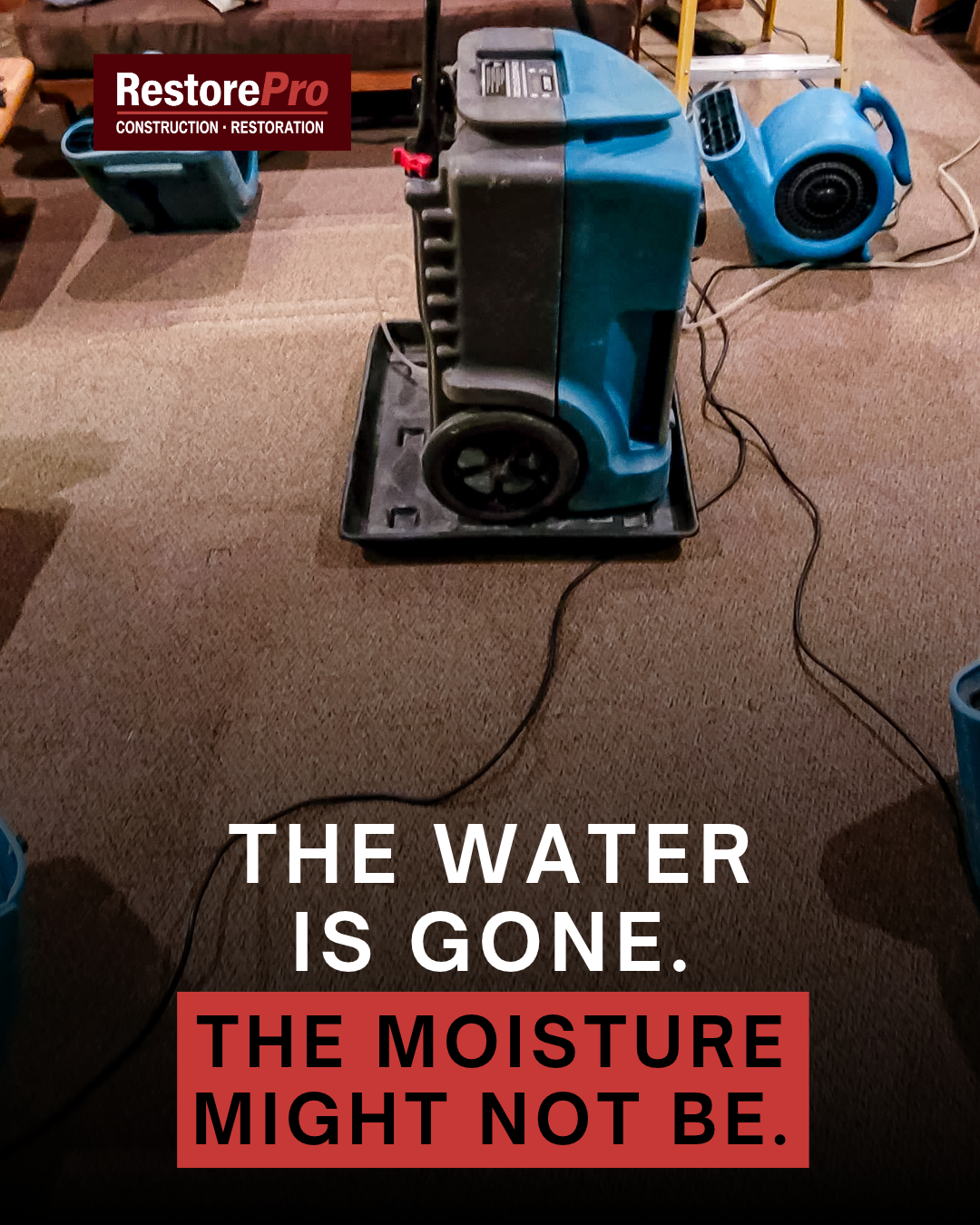
Carpet drying equipment in a room, with text: “THE WATER IS GONE. THE MOISTURE MIGHT NOT BE.”

Where Moisture and Odor Sources Can Remain Hidden

Water can affect materials beyond the original puddle or visible stain. The areas to investigate depend on the source, duration, building assembly, and how water traveled during the event. Not every musty room requires opening every wall. The assessment should use the damage history and current findings to identify sensible investigation locations.

Area to consider Why it may need assessment What appearance alone cannot show
Behind baseboards and wall finishes Water may have reached concealed layers The condition of framing or insulation
Beneath flooring Several layers may have been affected Whether the subfloor is adequately dry
Carpet and padding Surface cleaning may not address every layer Whether the materials remain suitable to retain
Cabinets and built-ins Enclosed spaces can complicate assessment What is happening behind or beneath the unit
Insulation and cavities Moisture may remain out of view The extent and condition of affected material
Stored contents An item can remain an odor source Whether the building or the item is responsible

The EPA's mold information slideshow identifies concealed locations such as the backs of wall materials and undersides of carpets and pads as possible hidden-mold sites. That supports careful investigation when the source is not visible, rather than an automatic conclusion that mold is present everywhere. Tell us where the odor is strongest without moving suspect materials to follow it. A targeted investigation is more useful than destructive searching by trial and error.

What the Odor Pattern Can and Cannot Tell You

A familiar cleaning-product smell and a persistent damp odor are different observations, but neither has a universal expiration time. Ask the company that performed the cleanup which products were used and whether a temporary product odor is expected. A new, worsening, or recurring musty smell is a reason to revisit the affected area. Do not assume the odor is harmless simply because the standing water is gone.


Record whether the smell stays in one room, follows a particular cabinet or flooring edge, or changes when the house has been closed. That information can help focus the inspection without diagnosing the material or organism responsible. An odor elsewhere in the home may also need consideration rather than being attributed automatically to the earlier leak. The aim is to identify the source, not to classify the problem by smell alone.

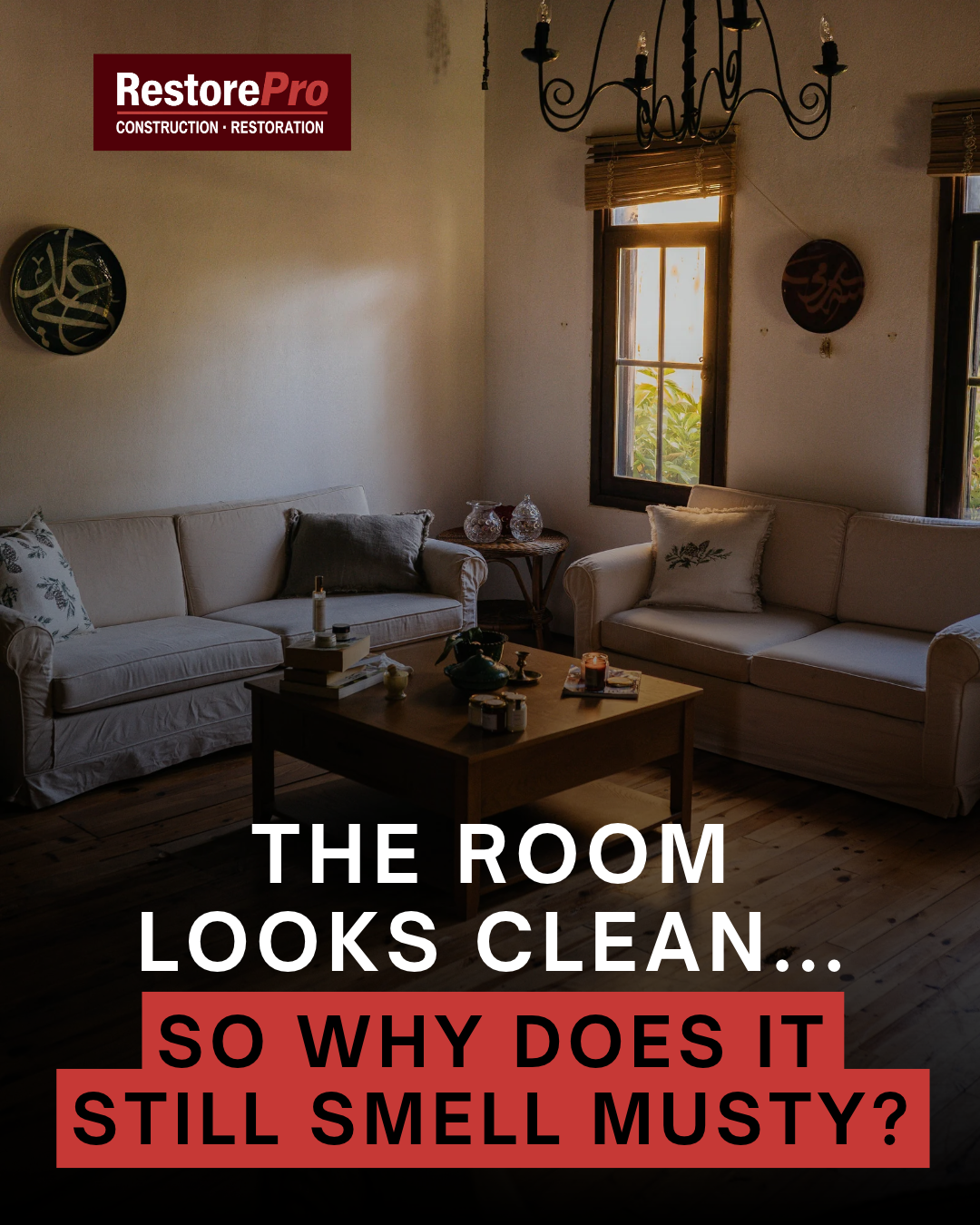
Living room with the text “The room looks clean... so why does it still smell musty?”

Safe Checks Before Requesting a Follow-Up Visit

Start with the history and visible changes you can document without disturbing the affected area. Note whether there is renewed staining, swelling, dampness, or water appearing after the original source was repaired. Stay away from wet electrical equipment, unstable finishes, and areas that may contain contaminated water. Do not remove trim, lift flooring, or cut drywall simply to see whether the smell becomes stronger.


Useful information to gather includes:

  • The original event: approximate date, source, rooms affected, and how long water was present if known.
  • Work already completed: extraction, material removal, drying, cleaning, and repair records.
  • Odor timing: when it started, whether it improved, and whether it later returned.
  • Visible changes: stains, swollen finishes, damp carpet, or recurring water documented from safety.
  • Equipment history: when drying equipment was installed, adjusted, and removed, if those records are available.
  • Other moisture clues: window condensation, a new appliance leak, or another event that occurred afterward.


Do not move or switch off restoration equipment without discussing it with the team managing the drying plan. Avoid spraying fragrances or multiple cleaning products over the affected area to test whether the odor disappears. If you see suspected growth, leave it undisturbed and report it. When active water entry or immediate electrical danger is present, safety and urgent assistance take priority over collecting records.

How Professionals Check Whether Materials Are Dry

A moisture assessment should establish which materials are affected and what evidence supports the next step. We use the damage history, accessible inspection, moisture measurements, and appropriate imaging to help map the concern. Readings need context, including the material, instrument, location, and conditions being compared. There is no single household moisture number that proves every type of wall, flooring, and framing is ready for reconstruction.


Moisture mapping and repeat readings

A documented moisture map connects readings to locations rather than reducing the assessment to a verbal statement that the room seems dry. Repeat measurements can help show whether the identified materials are progressing toward suitable drying goals. Ask which points are being monitored and what comparison supports the conclusion. If an area is not improving as expected, the team should explain what further investigation or plan change is needed.


Thermal imaging and its limits

FLIR's guidance on water-leak detection explains that thermal cameras show temperature patterns rather than seeing moisture inside walls directly. Suspect patterns need confirmation through appropriate moisture measurement and investigation. A colorful image is therefore a useful locating tool, not proof of mold or a complete drying certificate. We interpret imaging alongside other findings rather than use it as a substitute for material assessment.


Written findings that support the decision

Our restoration process includes documentation of affected areas and drying progress. Ask for an explanation of the retained materials, the findings supporting their condition, and any inaccessible areas that remain uncertain. The report should also distinguish stopping the original leak from drying its consequences. If another moisture source is suspected, it should be identified as a separate next step rather than hidden inside a generic odor-treatment recommendation.

When More Drying Helps and When Materials Need Removal

Additional drying may be appropriate when retained materials remain suitable and the evidence shows moisture still needs to be reduced. Removal may be necessary when materials are contaminated, physically damaged, unsuitable to retain, or cannot be adequately addressed in place. These decisions depend on the actual water event and material condition. A musty smell alone cannot decide which walls or floors should be discarded.

Findings established during assessment Possible direction Question to ask
Suitable retained materials still show excess moisture Adjust or continue structural drying What readings and drying goals support the plan?
Moisture returns after improvement Investigate a continuing or new source Has the source correction been verified?
Damaged or unsuitable porous materials Controlled removal and replacement may be needed Why can these materials not remain?
Confirmed growth affecting the restoration scope Mold remediation may be appropriate What areas and materials are included?
Retained contents appear to be the odor source Contents-specific assessment and treatment Is the building itself also affected?
Moisture findings do not explain the odor Broaden the source investigation Which alternative causes need evaluation?

The EPA's brief guide to mold and moisture emphasizes fixing moisture problems and notes that some moldy porous materials may need disposal because growth can be difficult to remove from them. It does not mean every wet material must be removed or that every musty room needs full demolition. Our approach is to explain the findings behind the proposed scope. You should understand why continued drying, cleaning, removal, or further investigation is being recommended.

When Mold Remediation May Be Part of the Answer

A water event and persistent odor justify considering microbial concerns, but they do not establish the organism, location, or extent. Visible growth and suspected concealed damage need appropriate assessment. Where remediation is warranted, the plan should address affected materials and moisture conditions together. Surface paint, scent products, or a general spray cannot stand in for that work.


Our mold remediation and restoration services can be coordinated with water-damage recovery when the findings support it. For a separate winter moisture concern, our guide to mold around windows in cold weather explains why condensation and leaks need different investigation. A new condensation problem should not automatically be blamed on an earlier restoration project. Similarly, fixing a leak does not establish that every affected material has been assessed or remediated.

Why Northern Arizona Winter Conditions Need Context

A freeze-related pipe failure, appliance leak, or snowmelt intrusion can affect materials even when the visible water is removed quickly. Closed rooms and changes in household ventilation or humidity may influence when occupants notice an odor. Those circumstances are useful history, not proof of a particular cause. A winter explanation should still be supported by the inspection findings at your property.


For Show Low and Payson homeowners, document the event itself rather than assume all seasonal water problems behave the same way. Our comparison of plumbing leaks and storm water intrusion explains how different sources can affect the investigation. Homes in Heber, Winslow, and Snowflake also need assessments based on their construction and damage history. Dry outdoor conditions do not, by themselves, confirm that concealed indoor materials have returned to a suitable condition.

What Follow-Up Restoration May Cost and How Completion Is Verified

We define follow-up work around the findings rather than quote an odor-removal package before identifying the source. For broad budgeting context, HomeGuide's water-damage restoration guide reports an average national project range of $2,000 to $6,000. That describes broader restoration projects, not the price of an odor inspection or a guarantee that your home needs that amount of work. We will explain the assessment and proposed scope so you can distinguish investigation, drying, remediation, and reconstruction.

Scope item Cost context or purpose What to clarify
Broad water-damage restoration HomeGuide national average project range: $2,000 to $6,000 This is not a dedicated odor-inspection price
Follow-up moisture assessment Defines current conditions Areas inspected, measurements, and documentation
Additional drying Based on affected materials and progress Equipment, monitoring, and completion criteria
Material removal Based on condition and suitability to retain Boundaries, protection, and disposal
Mold remediation when warranted Requires an evidence-based scope Affected areas, cleanup approach, and verification
Reconstruction Follows the appropriate restoration stages Which materials and finishes are being replaced

Ask what establishes completion

Completion should include the relevant source correction, suitable material conditions, and an explanation of the work actually completed. Ask whether any separate plumbing, roofing, HVAC, or other source-specific task remains outstanding. Odor improvement is useful information, but it should not be the only evidence used to judge retained building materials. A room that smells better after fragrance has been added does not answer the drying question.


Keep the records and report changes

Retain the scope, photographs, moisture documentation, and any instructions for follow-up. If the odor or dampness returns, report when and where it happened so the condition can be reassessed. A new symptom deserves investigation without automatically establishing fault or requiring the whole restoration to be repeated. The records help distinguish a persistent condition from a new event or another source.


Questions to ask at the final discussion

  • Has the moisture source been corrected, or is another professional's work still needed?
  • Which affected materials were retained, removed, or replaced?
  • What measurements support the conclusion that retained materials are suitably dry?
  • Were there inaccessible areas or limitations that need further attention?
  • If mold remediation was included, what completion or verification steps apply?
  • Who should I contact if a musty smell, staining, or dampness returns?


The EPA's moisture guide describes resolving the water problem and checking for remaining growth or moldy odors as relevant to cleanup completion. That is a broader assessment than simply removing visible water. Ask the restoration team to explain the criteria relevant to your specific project. A clear handover helps you understand what is complete and what requires continued attention.

Frequently Asked Questions

  • Why does my house still smell musty even after the water has been cleaned up?

    A persistent musty smell may indicate hidden moisture trapped beneath flooring, behind walls, or inside insulation. Even when standing water has been removed, building materials can retain moisture that contributes to unpleasant odors or microbial growth. At RestorePro, we provide professional water damage restoration services in Show Low, AZ, and surrounding communities to help identify hidden moisture and determine whether additional drying or remediation is necessary.

  • Does a musty smell after water damage always mean there is mold?

    Not necessarily. Musty odors can result from damp building materials, affected belongings, or lingering moisture without confirming mold growth. However, persistent odors should be investigated because mold can develop in areas that remain damp. RestorePro offers mold remediation and water damage restoration services to help homeowners identify moisture-related problems and address affected materials when necessary.

  • Can water damage remain hidden behind walls or underneath floors?

    Yes. Water can travel beneath flooring, behind baseboards, and into wall cavities without leaving obvious signs on the surface. These concealed areas may remain damp even when the room looks completely dry. Our team at RestorePro uses moisture assessment techniques and appropriate equipment to investigate affected areas and recommend structural drying, repairs, or further restoration based on the findings.

  • How long should a musty smell last after water damage restoration?

    There is no specific timeframe because lingering odors depend on the original water damage, affected materials, and whether the moisture source has been fully addressed. A temporary cleaning-product odor may fade, but a persistent or returning musty smell deserves further investigation. If your home in Show Low, Payson, or nearby areas continues to smell damp after cleanup, RestorePro can assess the affected areas and help determine the appropriate next steps.

  • Can I get rid of a musty smell by using an air freshener or dehumidifier?

    Air fresheners may temporarily mask unpleasant odors, while dehumidifiers can help manage indoor humidity. However, neither guarantees that moisture trapped inside walls, flooring, or insulation has been adequately addressed. If hidden moisture or damaged materials are responsible, professional restoration may be necessary. RestorePro provides structural drying and water damage restoration services designed to address moisture problems rather than simply covering up the smell.

  • When should I call a professional restoration company for a lingering musty smell?

    Contact a restoration professional if the odor persists, returns after cleaning, or occurs alongside water stains, swollen flooring, damp walls, or suspected mold growth. These warning signs may indicate that affected materials need additional assessment or treatment. RestorePro helps homeowners throughout Show Low, Payson, Heber, Winslow, and Snowflake with water damage restoration and mold remediation services. Contact RestorePro to discuss your concerns and arrange an assessment of the affected areas.

Get the Source of the Musty Smell Checked

If your home still smells musty after water damage cleanup, we can assess the affected materials and help identify the appropriate next step. We serve Show Low as well as Payson, Heber, Winslow, and Snowflake. Tell us about the original leak, work already completed, and where or when the odor persists. Those details help us focus on the current condition rather than assume the source from the smell alone.


Contact RestorePro to discuss a moisture assessment and restoration options. Our water damage restoration services and mold remediation services address different needs according to the findings. We will explain whether further drying, material repair, remediation, or another investigation is appropriate. You can then make the next decision with a clearer understanding of what remains affected and why.


Helpful Services and Related Reading

Recent Posts

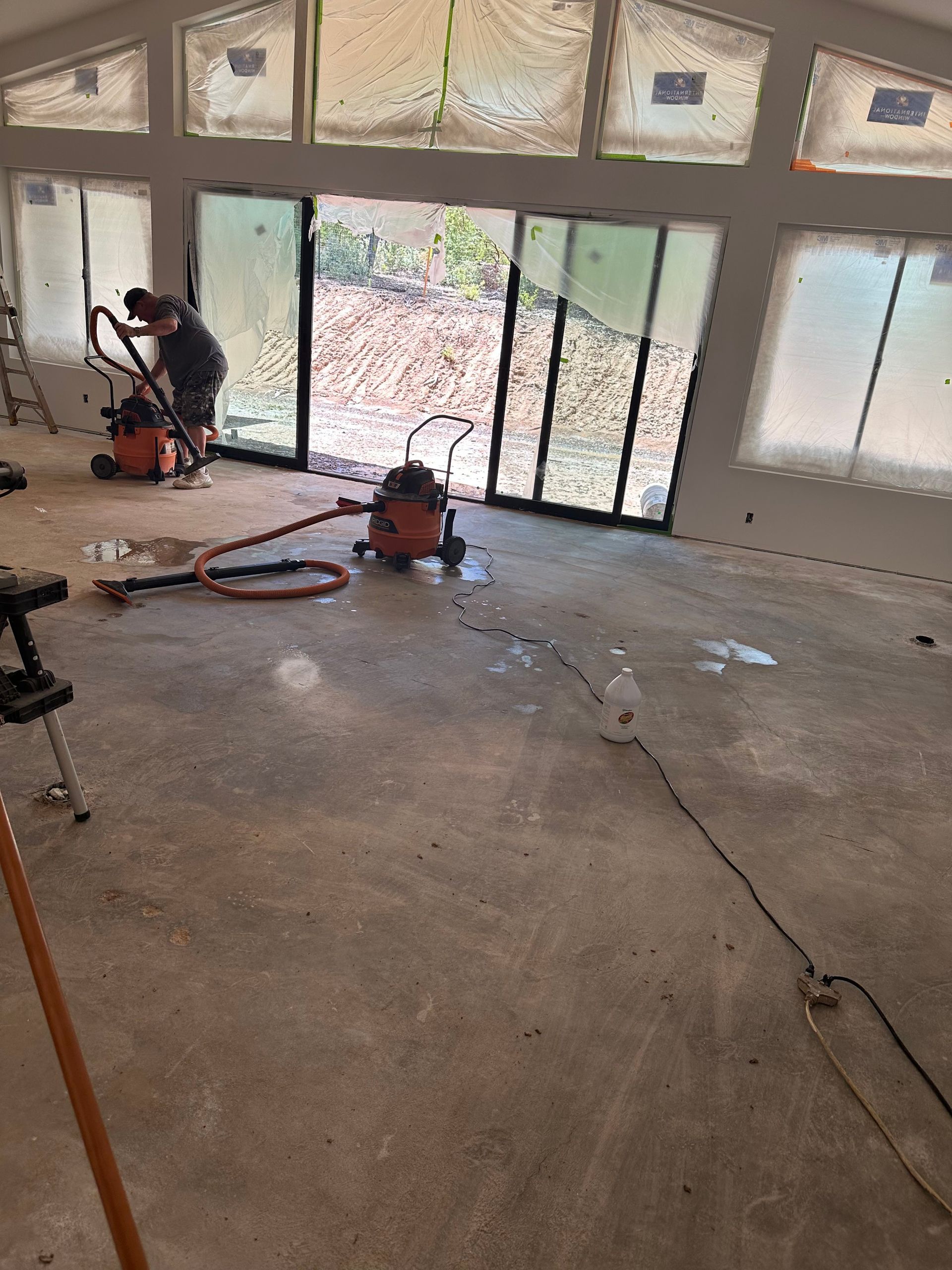
Large unfinished room with workers using power tools and debris on the floor near glass doors
November 9, 2026
Learn when wet carpet can be saved, why padding and subfloors matter, and when Show Low homeowners need expert water extraction and structural drying.
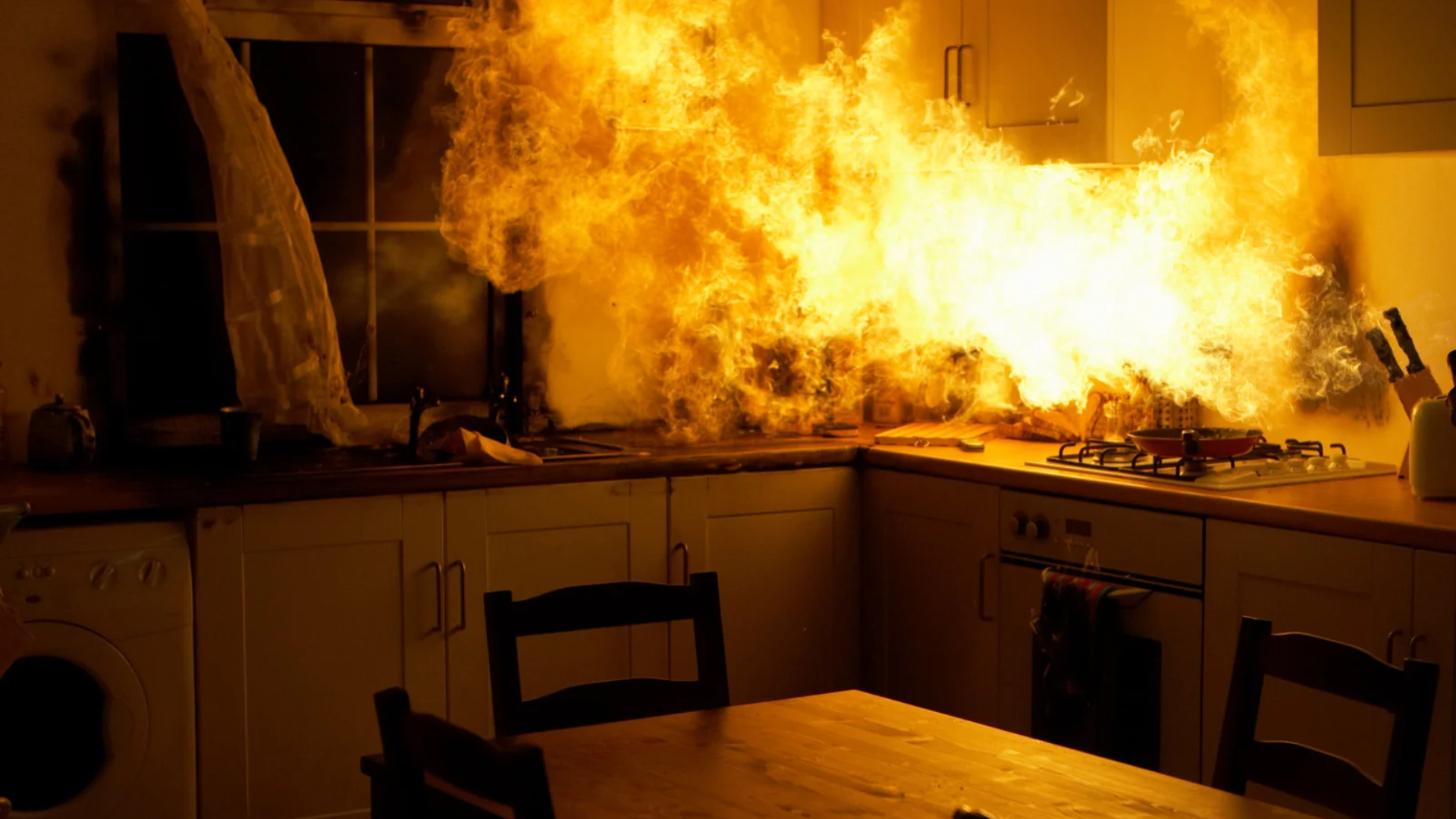
Kitchen engulfed in bright orange flames, with smoke and fire spreading across the counter area.
November 2, 2026
Learn seven holiday cooking mistakes that can cause fire and smoke damage, practical prevention tips, and when Show Low homeowners need restoration help.
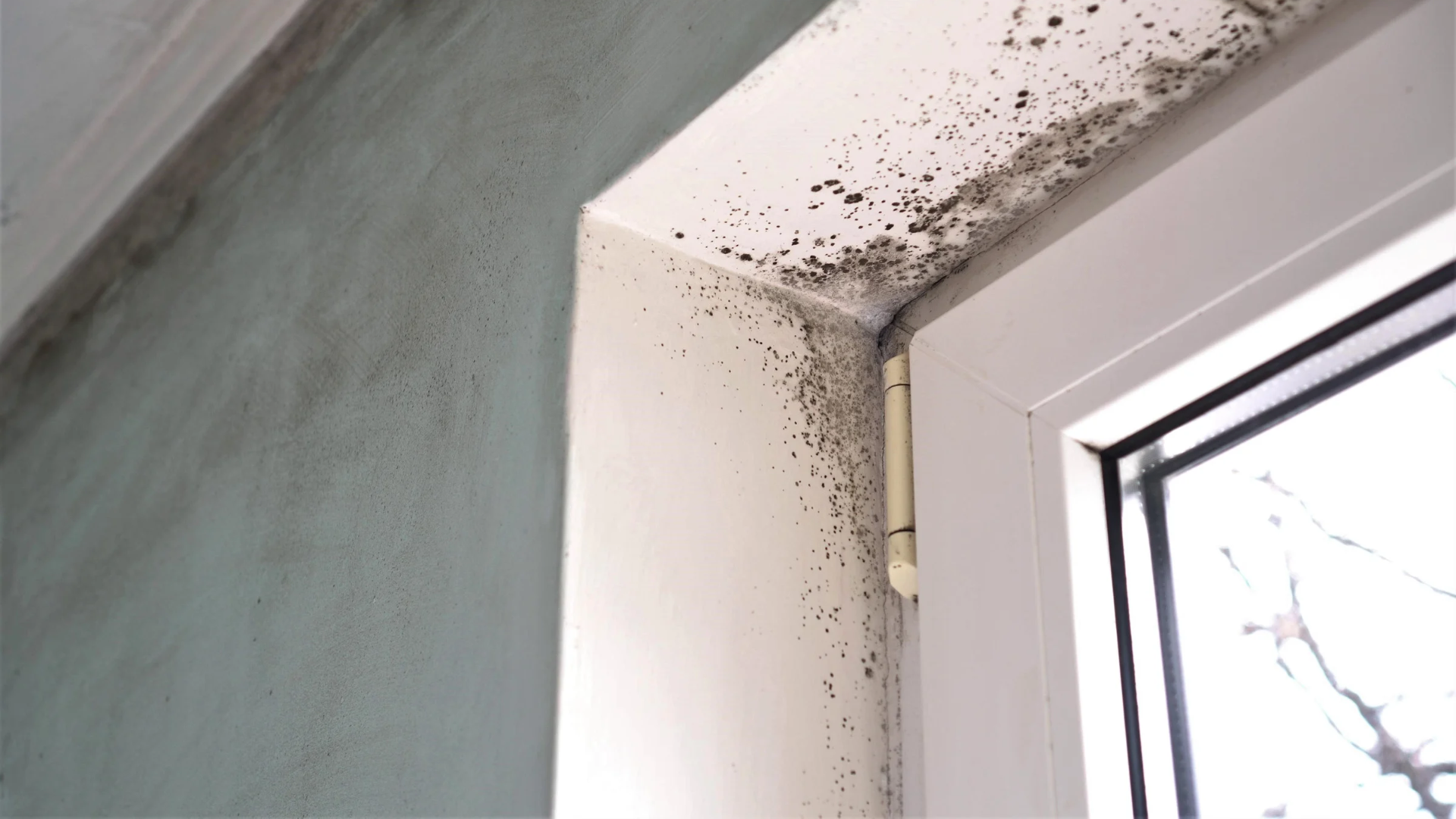
Mold spots on a white window frame and surrounding wall corner indoors
October 26, 2026
Learn why mold appears around windows during cold weather, how condensation differs from leaks, and when Show Low homeowners need professional remediation.
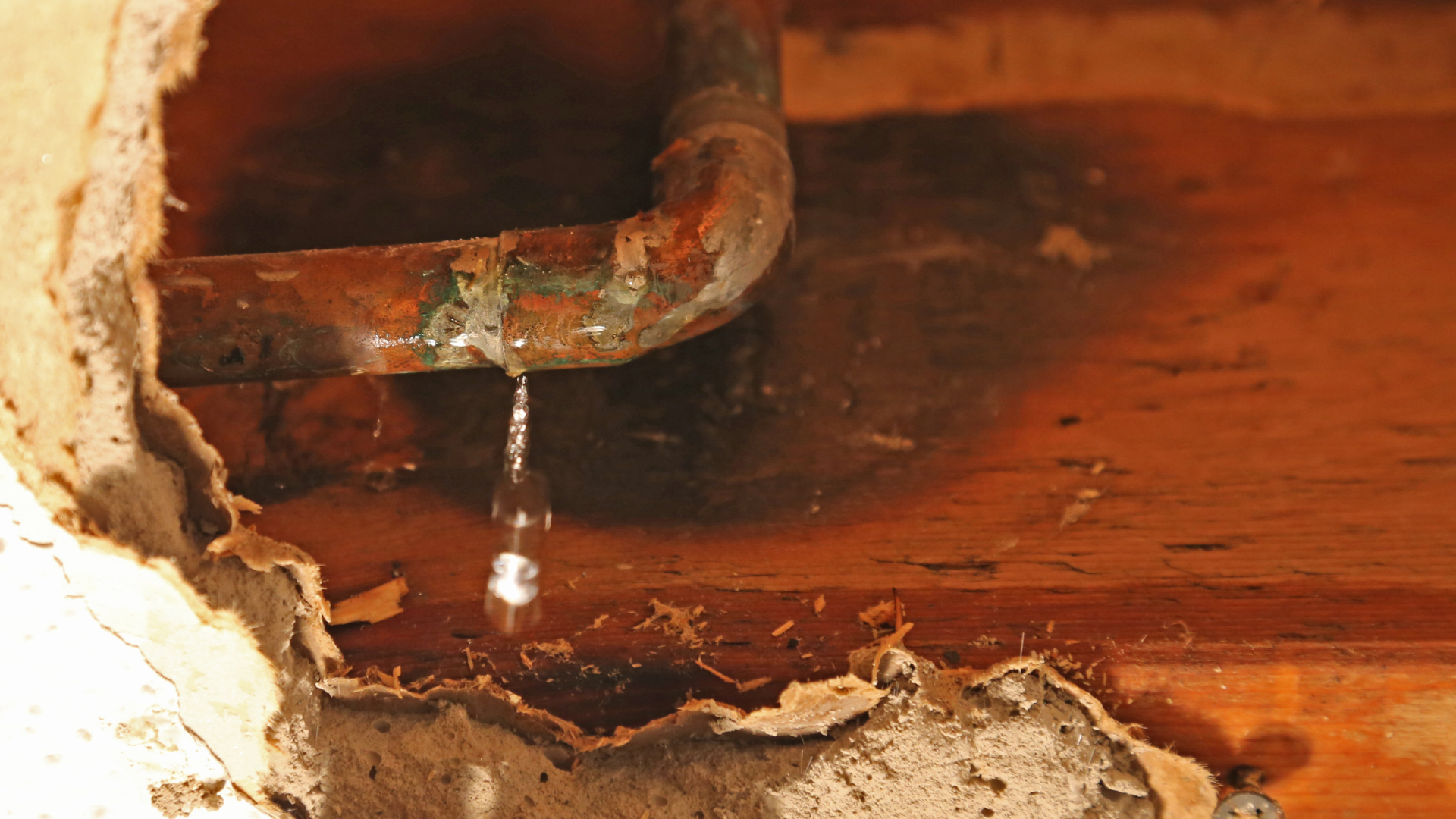
Rusty metal pipe dripping water onto a damaged wooden surface with peeling paint
October 19, 2026
Compare plumbing leaks and storm water intrusion, learn where hidden moisture travels, and know when Northern Arizona homes need structural drying today.
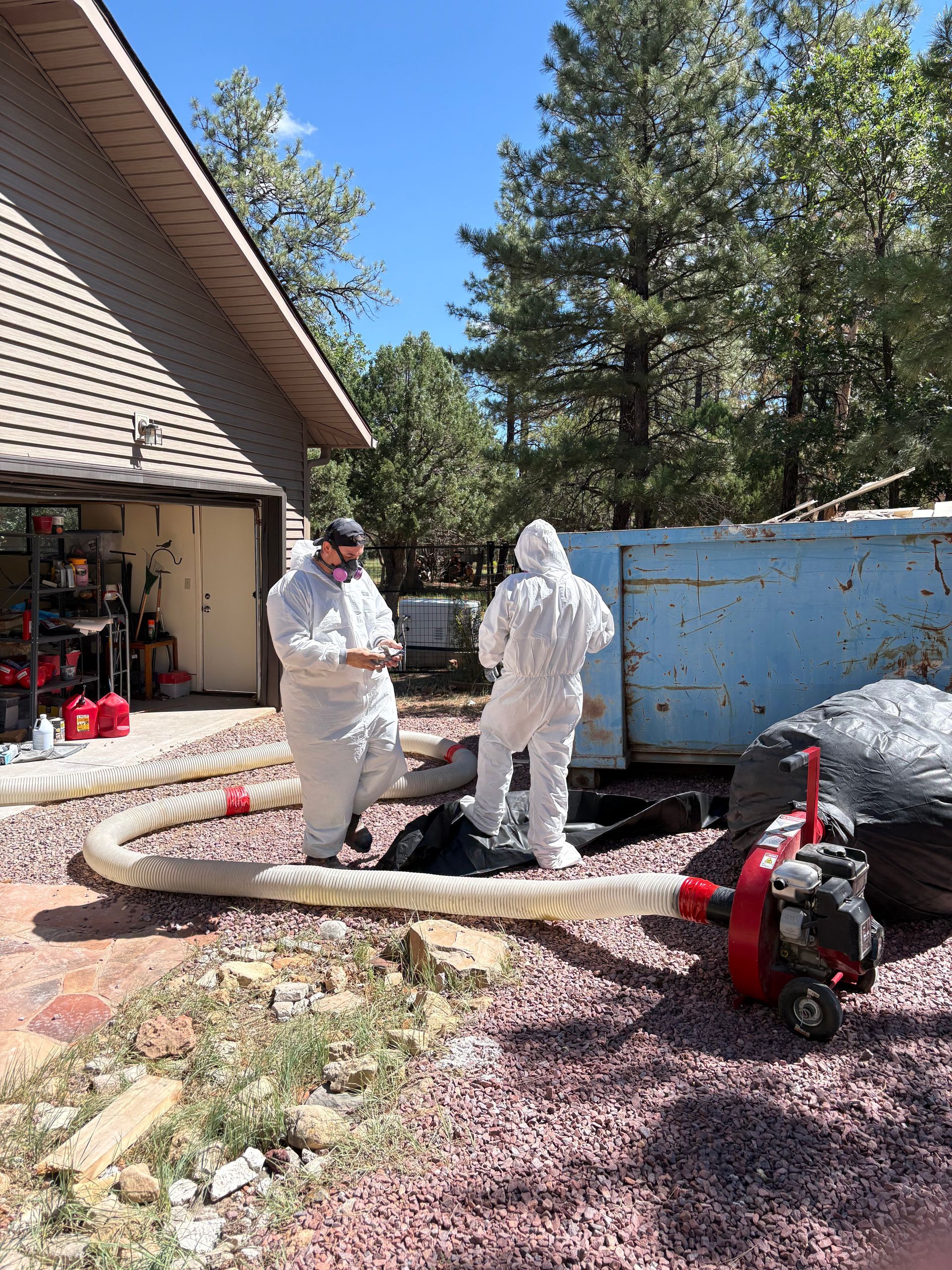
Two workers in white protective suits inspect a red hose near a blue dumpster beside a garage.
October 12, 2026
Learn which belongings may be saved after a house fire, what should be discarded, and how contents restoration can help Northern Arizona homeowners now.
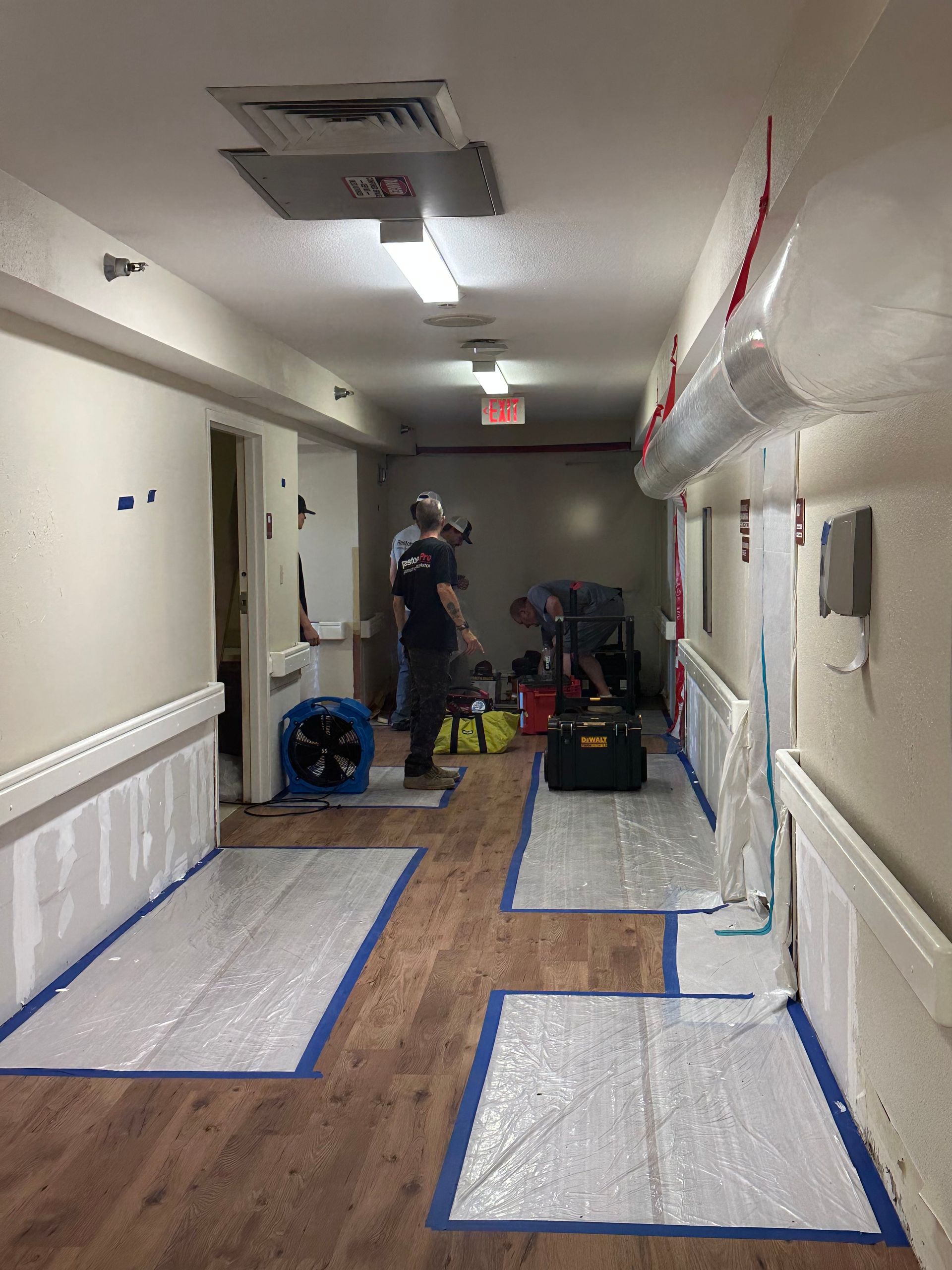
Hallway with floor-covered protection, cleaning equipment, and a worker standing near supplies.
October 5, 2026
Learn seven signs fireplace smoke has left soot, hidden odors, or HVAC contamination in your Arizona home and when professional cleanup may be needed.
Large tan cabinet or panel being moved on a dolly in a doorway, with a blue cord on the floor.
September 28, 2026
Learn how freezing temperatures turn small pipe weaknesses into major water damage, what to do first, and when Show Low homes need emergency restoration.
Long hallway under renovation, with covered walls, tools, and debris on the floor.
September 21, 2026
Compare water damage restoration vs mold remediation for Payson homes. Learn about hidden moisture, drying, mold signs, costs, and post-monsoon next steps.
RestorePro construction sign beside trees and a truck at a roadside location
September 14, 2026
Learn 7 signs wildfire smoke caused hidden damage inside your Show Low home, when smoke odor and soot need restoration, and what cleanup may cost in 2026.
Person in white protective suit sprays foam sealant along a ceiling seam in an unfinished room
September 7, 2026
Learn when wet drywall can be dried after a Payson monsoon storm, when replacement is safer, how structural drying works, and what repairs may cost now.
Show More

Is Your Property Damaged Right Now? Do Not Wait.

Every hour without professional mitigation means more structural damage and higher repair costs. Whether you are dealing with standing water, fire residue, or visible mold growth, the fastest decision you can make is calling a team that is already on the way. RestorePro has certified crews on call across Payson, Show Low, Snowflake, and Winslow, ready to respond within 30 minutes of your call.