Black construction crane lifting a black building icon, with a city skyline silhouette

6 Types of Storm Damage Northern Arizona Homeowners Miss Until It Is Too Late

July 9, 2026

Share this article

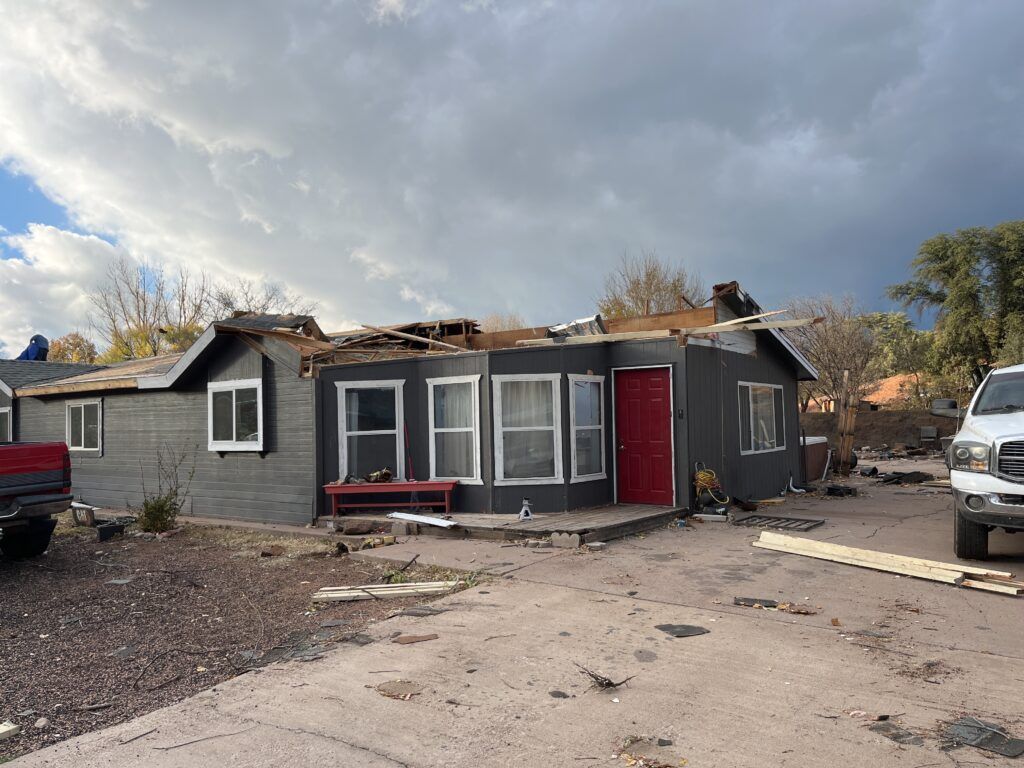
When a storm moves through Payson, Show Low, Snowflake, or Winslow, most homeowners do a quick walk-around afterward. They check for obvious damage. If nothing looks broken, they assume nothing is wrong.


That assumption is where the real damage begins.


RestorePro's crews have walked into Northern Arizona homes days, weeks, and sometimes months after a storm where the homeowner saw nothing wrong from the outside. What the thermal imaging and moisture meters found inside was a different story. Wet insulation. Mold establishing behind drywall. Subfloor framing that had been absorbing moisture through three consecutive monsoon events without a single visible sign from the floor above.


The storm damage that costs Northern Arizona homeowners the most is the kind that does not announce itself. According to IICRC S500 standards, mold can begin developing on wet building materials within 24 to 48 hours. In Northern Arizona's post-monsoon summer heat, that clock starts the night of the storm. A Tuesday night storm can have mold established in a wall cavity by Thursday morning with no visible sign from inside the home.


The six types below are what RestorePro finds most consistently after Northern Arizona storms. Every one of them was missed by the homeowner until the window for early intervention had already closed.

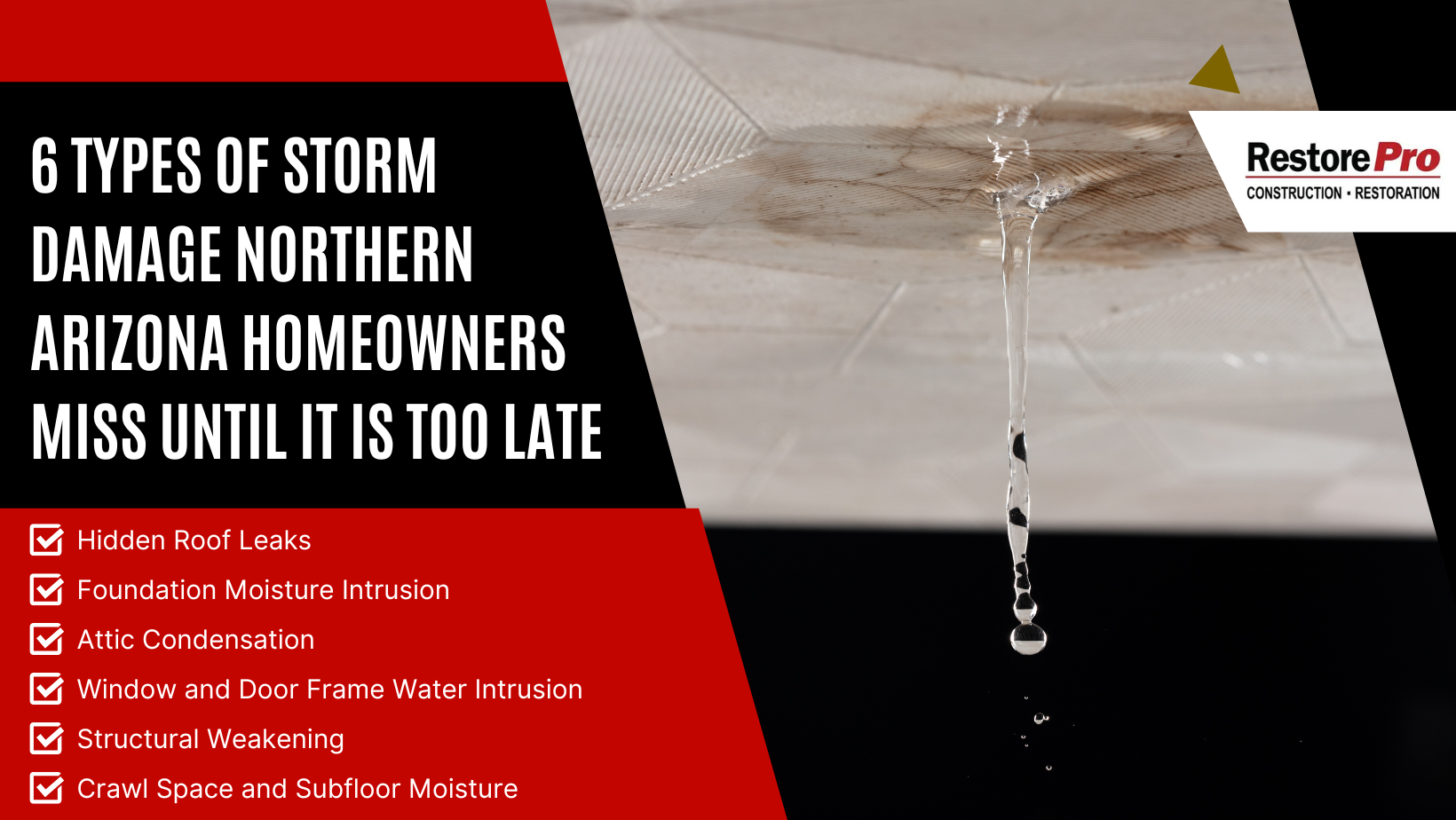
Storm damage promo with torn roof and hail, reading “6 types of storm damage Northern Arizonans miss until too late.”

Why Northern Arizona Storms Produce Damage That Valley Homes Do Not See

RestorePro serves communities from Payson through Show Low, Snowflake, Winslow, and Prescott Valley. The elevation, terrain, and climate these communities share create damage patterns that are genuinely different from what restoration companies in Phoenix or Tucson encounter.

Northern Arizona condition Why it matters for storm damage
Elevations of 4,000 to 7,500 feet Produces rapid temperature drops that cause attic condensation without any roof breach
Impermeable caliche soil Channels monsoon runoff into concentrated flows that overwhelm foundations
Post-fire burn scars Dramatically increase flash flood and debris volume in the Rim Country and White Mountains
Vacation and cabin properties Sit unoccupied for weeks while hidden moisture compounds behind walls
Winter freeze-thaw cycles Stress foundation materials, pipes, and roof assemblies repeatedly across the cold season

These are not generic storm damage concerns. They are what RestorePro's crews are trained specifically to find in this region.

Type 1: Hidden Roof Leaks from Flashing Failure

Flashing is the first thing RestorePro checks on every post-monsoon roof assessment. Not because it is the most dramatic damage, but because it is the source of the call more often than any other single failure point.


Flashing is the metal installed at every junction where the roof surface meets a vertical element: chimney bases, skylights, pipe vents, and roof-to-wall transitions. These are the points that standard visual inspection misses because they show no exterior damage. The sealant at a flashing joint can separate by a fraction of an inch, invisible from the ground, and allow wind-driven rain to enter the roof assembly at an angle that vertical rainfall never would.


According to the National Weather Service Flagstaff office, monsoon thunderstorms in Northern Arizona can produce winds exceeding 60 mph. At those speeds, rain does not fall vertically. It finds every gap.


What RestorePro finds inside after a flashing failure is rarely a dripping ceiling. It is wet insulation three feet from the entry point, moisture along a rafter run, and the beginning of mold on the underside of the roof decking. The ceiling stain that finally prompts the call may be in a completely different room from where the water entered.

What to check after any monsoon event What it may indicate
Attic discoloration or wet insulation Active flashing failure
Ceiling stain not near any penetration Water traveling along framing
Musty smell developing within 48 hours Moisture reached organic materials
Soft drywall below roof penetrations Hidden water in wall cavity

What to do: Get into the attic within 48 hours of any significant monsoon event. If you find moisture, wet insulation, or staining on the underside of the roof decking, call RestorePro before doing anything else. The pre-remediation condition needs to be documented for your insurance claim before any cleanup begins.

Type 2: Foundation Moisture Intrusion from Flash Flood Runoff

RestorePro sees this most often in Payson properties after back-to-back monsoon events saturate the same foundation perimeter twice. The first storm saturates the soil. The second one has nowhere for that water to go except against the foundation wall.


The terrain around Payson and Winslow features impermeable caliche soil that channels monsoon rainfall into concentrated surface runoff rather than gradual absorption. Water that falls half a mile upslope can arrive at a foundation perimeter within minutes, in volume far exceeding what the drainage around the structure was designed to handle.


What makes this damage type consistently missed is that it produces no immediate interior sign. Water forces through porous concrete, through gaps at utility penetrations, and through any crack in the foundation wall. The interior symptoms, damp walls, white mineral deposits from evaporating water, and musty odor, develop over weeks to months. By the time a Payson homeowner notices them, the moisture has been working through the foundation through multiple storm events.


For properties near recent burn scars, the National Weather Service has documented that fire-damaged soils lose their ability to absorb rainfall, dramatically increasing runoff volume. RestorePro has responded to properties in the Rim Country where a single monsoon season after a nearby fire produced foundation moisture that would have taken years to develop under normal conditions.


What to do: Within 48 to 72 hours of any flash flood or heavy runoff event, inspect the exterior foundation perimeter and check crawl spaces and lower-level walls for moisture, odor, or white mineral deposits. These are not cosmetic issues. They are the first signs of a problem that compounds with every subsequent storm.

Type 3: Attic Condensation from Rapid Temperature Changes

This is the damage type RestorePro finds most often in Show Low and Snowflake homes that had no visible storm damage. No missing shingles. No ceiling stains. No interior water. And yet the thermal imaging shows moisture on the underside of the roof decking, and the moisture meters confirm it.


It happens because of elevation. Monsoon storms in the Show Low and Mogollon Rim corridor produce rapid temperature drops, sometimes 30 to 40 degrees Fahrenheit within an hour. When warm, humid air that has been building in a poorly ventilated attic contacts the suddenly cooled roof structure, condensation forms directly on the wood. No exterior breach required.


The homeowner who checks the ceiling and finds nothing, then looks at the roof exterior and finds nothing, concludes the storm passed without incident. RestorePro's crews know to check the attic decking directly, because that is where the IICRC S500 mold development threshold is already being met.


What to do: After any significant monsoon event in an elevated Northern Arizona community, a direct inspection of the attic decking is not optional. Dark staining, surface moisture, or discoloration on the wood surface means moisture has been present. RestorePro's assessments include thermal imaging that reveals temperature differentials and condensation-related moisture that are not visible to the eye or detectable without professional equipment.

Type 4: Window and Door Frame Water Intrusion

When RestorePro uses thermal imaging on a Northern Arizona home after a wind-driven monsoon event, wall cavity moisture behind windows and doors is one of the most consistent findings. It is also the finding homeowners are most surprised by, because there was nothing visible on the interior wall surface.


Wind-driven monsoon rain arrives horizontally. A gap in window frame caulking that would never allow vertical rainfall to enter becomes an active water passage under the lateral pressure of 60 mph wind-driven rain. The water that enters runs down the interior face of the exterior wall sheathing, inside the wall cavity, invisible from both finished surfaces. It saturates insulation and framing from behind before producing any interior stain.


The EPA recommends prompt attention to any area where moisture has penetrated a building assembly to prevent mold growth. In Northern Arizona's summer heat after a monsoon, that recommendation carries a 24 to 48 hour urgency.


What to do: After any monsoon event with significant wind-driven rain, press gently on interior drywall surfaces below exterior windows and doors. Soft or yielding drywall indicates moisture behind it. Do not wait for a stain to appear. By the time the stain is visible, the moisture has been in the wall for weeks.

Type 5: Structural Weakening from Repeated Wind Loading

This is the damage type that no visual inspection after a single storm will catch, and it is one of the reasons RestorePro recommends professional structural assessments for Northern Arizona homes that have experienced multiple significant wind events in the same monsoon season.


A single storm that stays below the structural failure threshold for a roof connection does not produce visible damage. But that same connection, loaded repeatedly across a six to eight week monsoon season, accumulates fatigue at the fasteners and framing joints in ways that are not detectable without getting into the attic and knowing what pre-failure conditions look like.


RestorePro's crews have found loose fasteners and shifted gable end connections in Show Low and Snowflake homes after active monsoon seasons where the homeowner reported no visible damage from any single storm. The cumulative loading had done its work quietly, and the roof that looked fine was measurably less capable of handling the next wind event than it had been before the season started.


What to do: If your home has experienced two or more significant wind events in the same monsoon season, a professional structural assessment is appropriate regardless of visible conditions. A fastener that is found loose during an inspection is a repair. A fastener found failed after the next storm is the beginning of a reconstruction.

Type 6: Crawl Space and Subfloor Moisture from Ground Saturation

Crawl space moisture is one of the most consistent findings RestorePro documents on post-storm assessments in the White Mountains and Mogollon Rim communities. Show Low, Snowflake, and Pinetop-Lakeside have significant crawl space housing stock, and the combination of clay-heavy soil, monsoon saturation, and limited post-storm inspection means moisture accumulates in subfloor framing across multiple seasons before anyone looks.


When monsoon rainfall saturates the soil beneath a crawl space, that moisture evaporates upward into the crawl space air and contacts the wood framing of the subfloor. Crawl spaces without adequate vapor barriers allow this cycle to continue for days or weeks after the storm ends. The framing absorbs moisture at the surface long after the standing water, if there was any, has drained away.


The floor above does not soften noticeably until the subfloor wood has been absorbing moisture repeatedly. By the time a homeowner notices bounce or softness underfoot, RestorePro is typically looking at a scope that spans more than one season of moisture exposure.


What to do: Within 48 to 72 hours of any significant rainfall event, a crawl space inspection is one of the most valuable things a Northern Arizona homeowner can do. RestorePro uses moisture meters at multiple points across the subfloor framing to identify absorption that is not visible at the surface and not detectable by feel from the floor above.

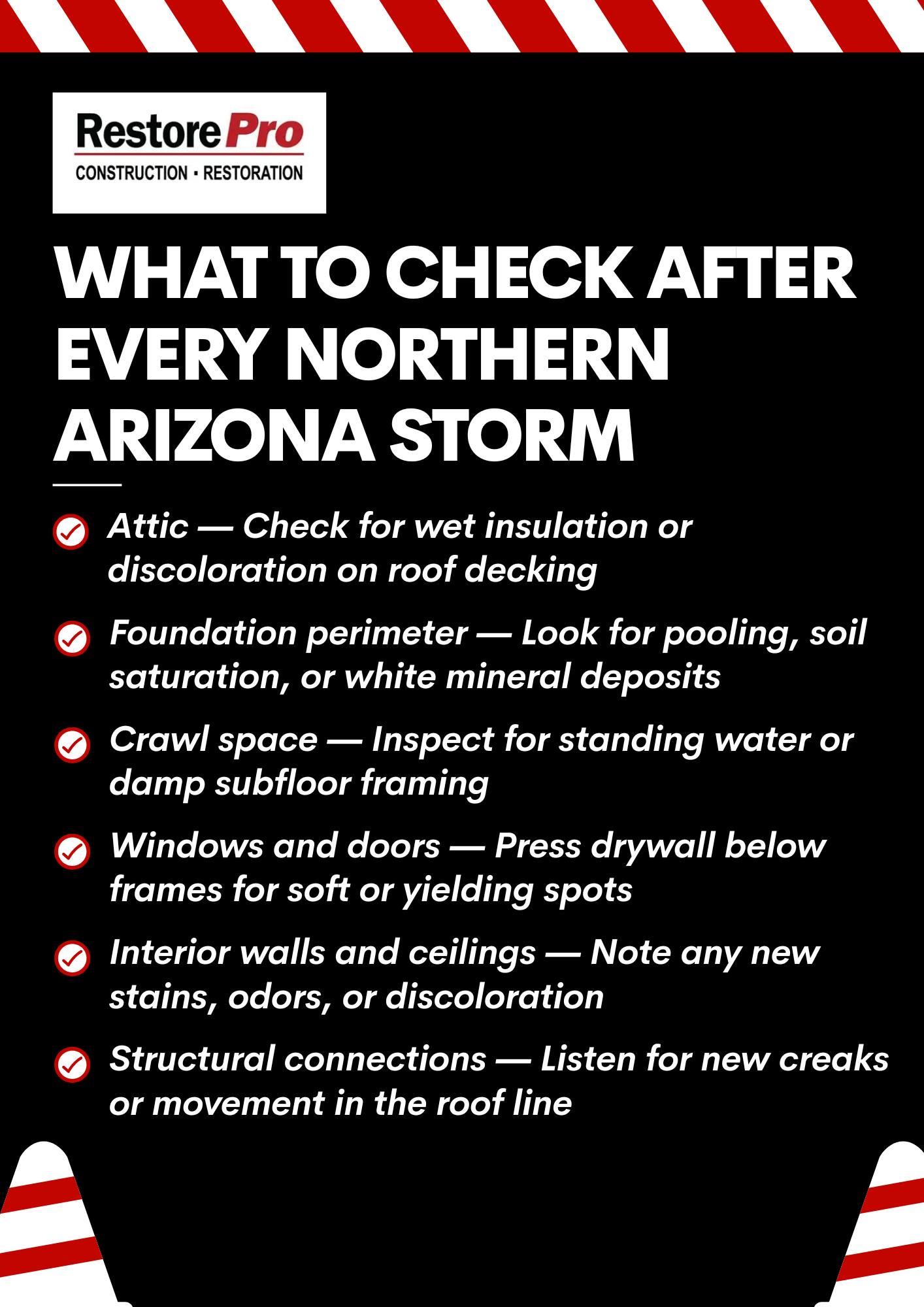
What to Check and When

Timeframe What to inspect
Within 2 hours Safety: electricity, sagging ceilings, contaminated water
Within 24 hours Document all visible damage before any cleanup begins
Within 48 hours Attic, crawl space, walls adjacent to windows and doors
Within 72 hours Foundation perimeter, exterior caulking, structural connections
Before next storm Any moisture found in this inspection must be addressed

Should You Call a Professional or Wait?

Situation What to do
Ceiling stain appeared after the storm Call RestorePro: document before cleanup
Musty odor within 48 hours of a storm Call RestorePro: mold clock is running
Soft drywall near any window or door Call RestorePro: moisture is in the wall
Crawl space has standing water or wet soil Call RestorePro: subfloor at risk
Foundation shows white mineral deposits Schedule assessment: water intrusion is ongoing
Nothing visible but storm was significant Schedule inspection: six types above are all hidden

Insurance Guidance

Arizona homeowners insurance typically covers sudden storm damage including wind, hail, roof intrusion, and structural damage. Ground-level flooding is frequently excluded, which makes the documentation of the water entry mechanism critical to whether a claim is approved.


The documentation RestorePro produces after every assessment: moisture mapping, thermal imaging findings, and written scope with photos. This documentation is formatted specifically for insurance adjuster review. Arizona policies require claims to be filed within one year of the storm event, but the pre-remediation documentation that supports the claim must be captured before any cleanup begins. Once cleanup starts, the evidence your adjuster needs is gone.

From Emergency Response to Complete Reconstruction

Storm damage that affects structural members, roof assemblies, wall framing, or subfloor systems is not a drying and patching job. It is a restoration and rebuild project. RestorePro handles both.


Because RestorePro is a licensed general contractor with family contracting roots dating back to 1961, the team that responds to the emergency is connected to the team that rebuilds the structure afterward. One company. One project manager. One point of contact from the first call through the final walkthrough. No coordinating between a restoration company and a separate contractor to close the walls.

Frequently Asked Questions

  • How quickly can RestorePro respond after a Northern Arizona storm?

    RestorePro provides 24/7 emergency response across all four locations: Payson, Show Low, Snowflake, and Prescott Valley. The team prioritizes active water intrusion and structural hazards.

  • Should I start cleaning up before RestorePro arrives?

    No. The condition before remediation begins is the evidence your insurance claim depends on. Document everything with photos and video before moving, removing, or cleaning anything.

  • What if my vacation property sat unoccupied after the storm?

    Unoccupied properties are one of the most common scenarios RestorePro handles in Northern Arizona's mountain communities. Hidden moisture that went undetected for weeks presents a larger mold and structural scope than moisture caught within 48 hours, but it is still documentable and addressable. RestorePro can assess the property and document the condition for insurance purposes regardless of when the damage occurred.

  • What makes Northern Arizona storm damage different from Valley restoration?

    Elevation, temperature swings, condensation patterns, burn scar proximity, and crawl space housing stock all produce damage types specific to the Rim Country and White Mountains. RestorePro's crews work in these communities year-round. The conditions that produce the six damage types above are not abstract knowledge for them. They are what the team walks into every monsoon season.

Whether you are dealing with active water intrusion, a storm that passed last week, or damage you are not sure how to categorize, RestorePro provides emergency response, expert guidance, and complete rebuilding services throughout Northern Arizona from the first call through the final walkthrough.


Contact RestorePro | Water Damage Restoration | Mold Remediation | Construction Services

Recent Posts

Mold-damaged dining room with stained walls, peeling paint, chandelier, and debris on the floor
July 22, 2026
Show Low sees intense monsoon rain from July–Sept. RestorePro explains why it causes mold, key signs to spot at home, and what to do if mold has started.
Unfinished wooden room interior with exposed beams, tools on floor, and forest visible through large window openings
July 14, 2026
Most Northern AZ homeowners call insurance right after property damage. RestorePro explains why it costs more, what to do instead, and how AZ claims work.
Workers in a narrow hallway clearing debris, with tools, ladders, and black trash bags spread around.
June 30, 2026
First hours after a house fire in Payson, Show Low, or Snowflake AZ shape damage and claims. RestorePro walks you through every step to protect your home.
Two white utility trucks parked beside a brick building on a gravel lot, one with a moving trailer.
June 23, 2026
Storms, water, mold, and fire are top property damage events in Payson AZ. RestorePro explains every step of the claims process and what your policy covers.
Two workers clearing debris in a stripped room with ladder, tools, and black trash bags
June 16, 2026
Monsoons, flooding, and winter freezes leave hidden damage on Snowflake AZ homes. RestorePro covers what to look for, document, and when to call a pro.
June 13, 2026
Northern AZ winters bring freezing temps, ice dams, and pipe bursts. RestorePro explains what to watch for and how to protect your home all season long.
Wooden picnic tables beside a cabin in a pine forest clearing
June 9, 2026
Overgaard homes face higher mold risk than most homeowners realize. Learn the warning signs and when to call RestorePro for mold remediation in Overgaard AZ.
By support June 4, 2026
Smoke odor often lingers long after soot is cleaned. RestorePro explains why smoke smells persist, where they hide, and when you need professional treatment.
Workers cleaning a stripped room with tools, ladders, and trash bags along the walls
By support May 28, 2026
Water damage isn't always visible. RestorePro explains what a professional water damage assessment covers, how it finds hidden issues, and what comes next.
By support May 15, 2026
Even small amounts of water can reach wiring, outlets, or breaker panels. RestorePro explains the hidden electrical hazards and how to keep your home safe.
Show More

Is Your Property Damaged Right Now? Do Not Wait.

Every hour without professional mitigation means more structural damage and higher repair costs. Whether you are dealing with standing water, fire residue, or visible mold growth, the fastest decision you can make is calling a team that is already on the way. RestorePro has certified crews on call across Payson, Show Low, Snowflake, and Winslow, ready to respond within 30 minutes of your call.