Why Calling Your Insurance Company First After Property Damage Costs Northern Arizona Homeowners More
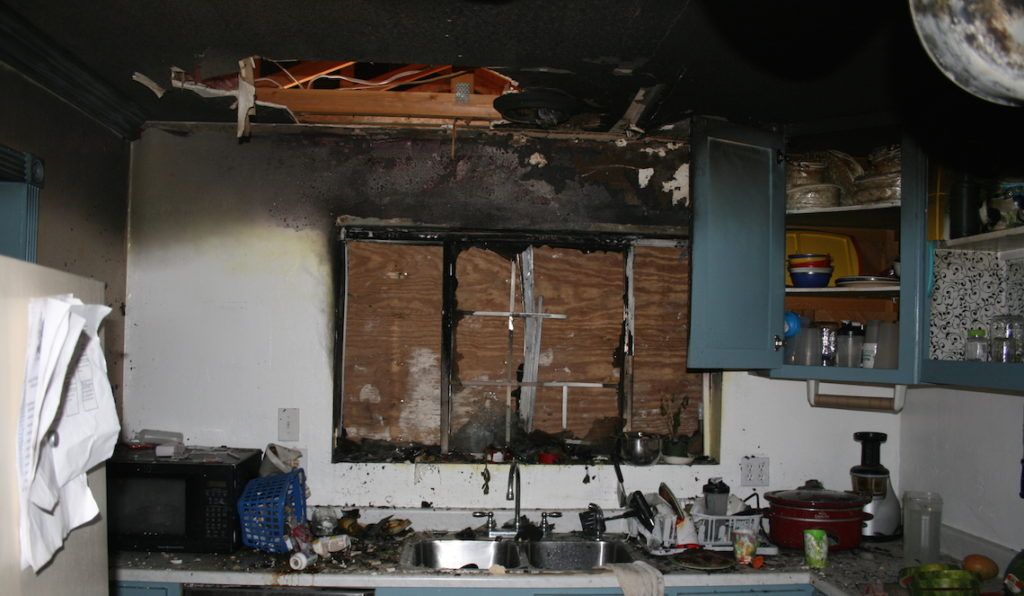
When a monsoon storm pushes water through the roof of a Payson home, or a pipe bursts in a Show Low cabin in January, or smoke fills a kitchen in Snowflake after a fire, most homeowners do the same thing. They call their insurance company.
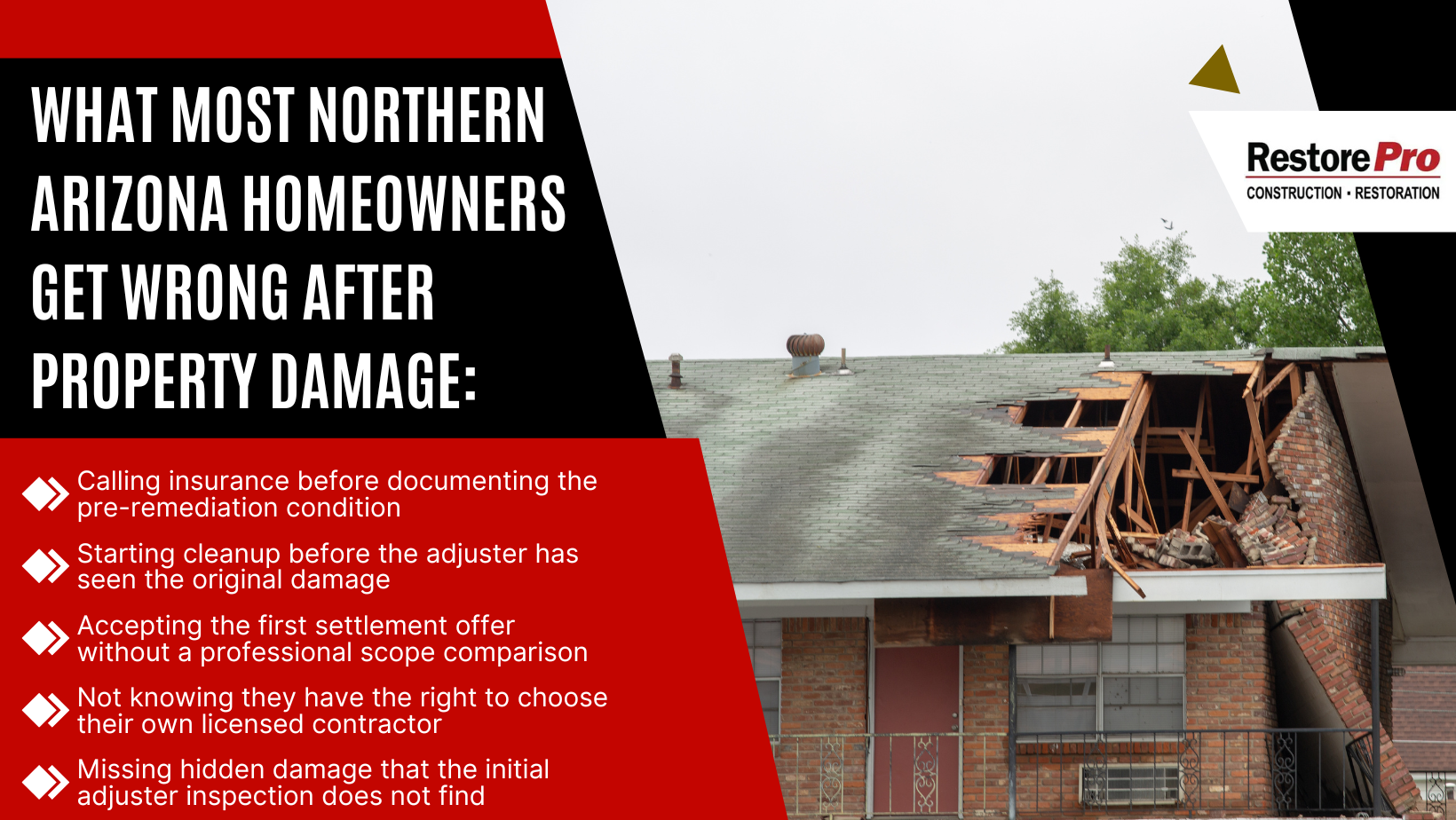
It is an understandable instinct. Insurance is what you have for exactly this moment. But calling the insurance company first, before documentation is complete and before a professional restoration assessment has been done, is one of the most consistent mistakes RestorePro sees Northern Arizona homeowners make after property damage. And it is a mistake that shapes the entire trajectory of the claim and the restoration in ways that are hard to correct once they are set in motion.
This guide explains what actually happens when you call your insurance company first, what Arizona law says about your rights as a policyholder, what the correct sequence of steps looks like, and how RestorePro's role in the process protects the homeowner's interests from the first call through the final settlement.

What Happens When You Call Your Insurance Company First
The insurance company's first obligation after receiving a claim is to open a file and assign an adjuster. The adjuster's job is to inspect the property, document the damage, and produce an estimate of the covered scope. The adjuster works for the insurance company.
That last sentence is the one most homeowners do not fully register in the moment. The adjuster is not your advocate. Their estimate is the insurance company's starting position on what the claim is worth, not a neutral third-party assessment of what restoring your home to pre-loss condition will actually cost.
When a homeowner calls insurance first and cleanup begins before the adjuster arrives, two problems develop simultaneously.
The documentation problem: The pre-remediation condition of the property is the evidence the entire claim rests on. According to the Arizona Department of Insurance and Financial Institutions (DIFI), homeowners should take pictures of the damage before any water mitigation, plumbers, or restoration contractors show up. Once cleanup begins, the visual record of the original damage condition is gone and cannot be recreated. An adjuster who arrives after cleanup has already started is documenting a partially remediated scene, not the full scope of the original damage. Line items that should be in the claim scope are not visible, and they may not make it into the estimate.
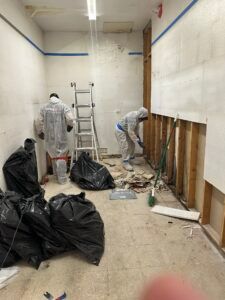
The scope problem: Most property damage involves hidden damage that is not visible from the surface. Moisture that has migrated into wall cavities, insulation that has absorbed water from firefighting, structural members that absorbed heat without burning directly. RestorePro's moisture mapping and thermal imaging reveals these hidden conditions before remediation begins. An adjuster conducting a visual inspection after cleanup has started frequently misses exactly these items. The homeowner discovers the gap when the restoration contractor submits their scope and the insurance estimate is significantly lower than the actual cost of the work.
What Arizona Law Actually Gives You the Right to Do
Most Northern Arizona homeowners do not know their Arizona policyholder rights before a damage event forces the conversation. These rights directly affect how the claim process unfolds and what options the homeowner has when the initial estimate falls short.
The right to choose your own contractor: According to DIFI's Disaster Assistance Resources, you have the right to choose your own licensed contractor for repairs. Your insurance company may recommend a contractor, but you are not required to use their preferred vendor. RestorePro is a licensed Arizona general contractor. The insurance company pays for covered restoration regardless of which licensed Arizona contractor performs the work.
The right to not accept the first offer: DIFI's Disaster Assistance Resources confirm that you are not required to accept the first settlement offer. You can negotiate with the adjuster, provide additional documentation, and if you still disagree, you can hire a public adjuster or consult an attorney. The initial adjuster estimate is the beginning of the process, not the end of it.
The right to prompt claim handling: According to United Policyholders' Arizona Insurance Consumer Rights guide, Arizona law requires your insurer to acknowledge your claim within 10 working days after receiving it. If your claim is being unnecessarily delayed, you can file a complaint with DIFI at difi.az.gov.
The right not to have an inquiry treated as a claim: According to DIFI's homeowners insurance guidance, if you call your insurer simply to ask questions about your coverage, explicitly state that you are making an inquiry and not filing a claim. Insurers evaluate your claim history periodically to determine premium rates and renewal eligibility. A call to ask questions that is logged as a claim can affect your premiums even if no payment is made.
What DIFI says you should not sign: According to DIFI's Disaster Assistance Resources, do not sign any documents that give a contractor exclusive rights to negotiate with your insurance company on your behalf. Read all contract details and only sign with a properly licensed contracting professional.
The Correct Sequence After Property Damage in Northern Arizona
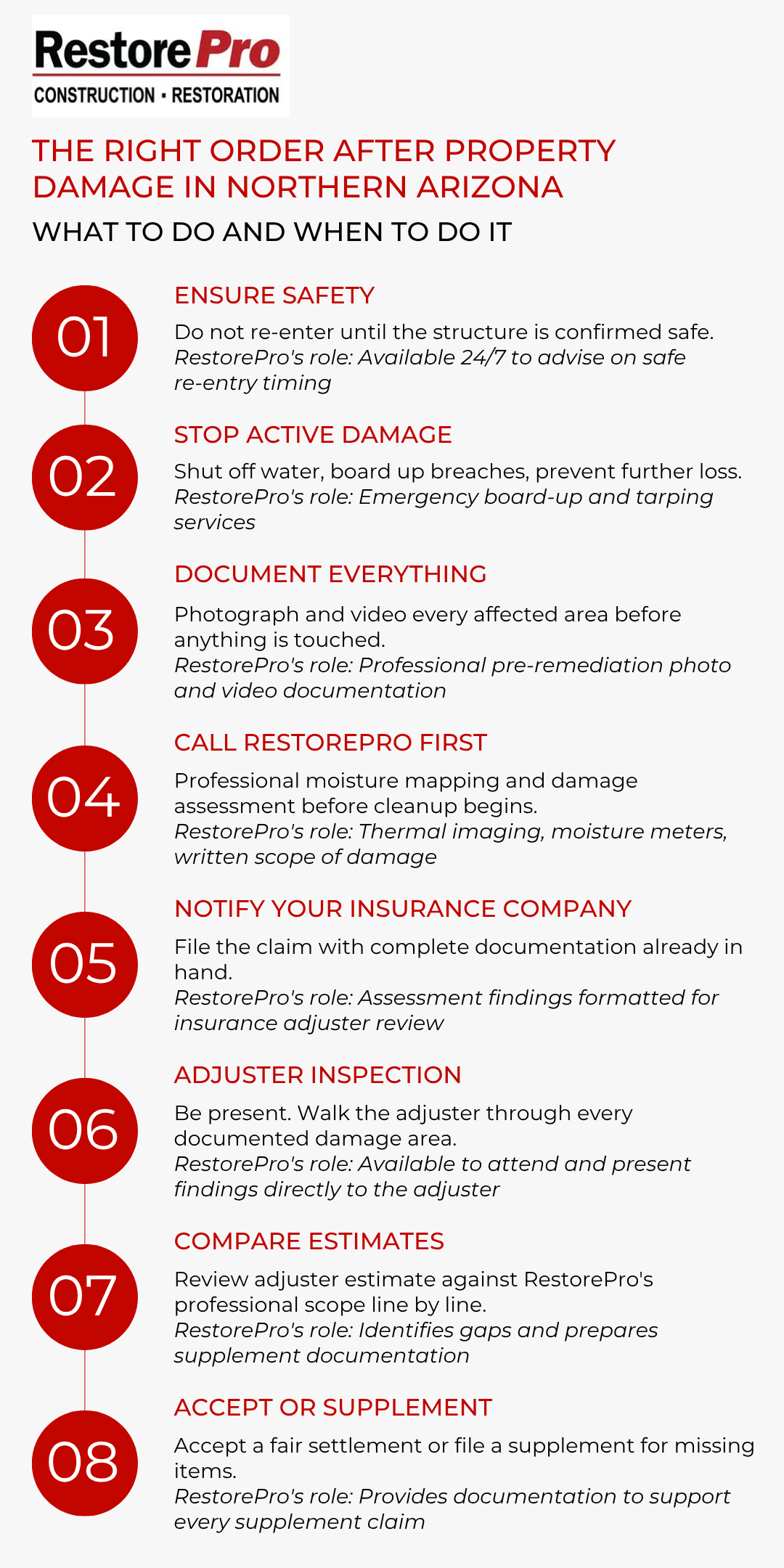
The sequence matters because each step builds the foundation for the next one. Doing them out of order creates problems that compound.
| Step | What happens | Why it matters |
|---|---|---|
| 1. Ensure safety | Evacuate if needed. Do not re-enter until fire department or structural assessment confirms safety | No documentation is worth entering an unsafe structure |
| 2. Stop active damage | Close the main water shutoff for water damage. Board up breaches for storm or fire damage | Stopping active damage is the homeowner's obligation under most policies |
| 3. Document everything | Photograph and video every affected area before anything is moved, cleaned, or removed | This is the evidence the entire claim depends on |
| 4. Call RestorePro for assessment | Professional moisture mapping and damage documentation before remediation begins | Creates the professional scope that supports a complete claim |
| 5. Notify your insurance company | File the claim with complete pre-remediation documentation in hand | You are now filing with evidence, not hoping the adjuster finds everything |
| 6. Be present for the adjuster inspection | Walk the adjuster through every area of documented damage | RestorePro can be present to explain findings directly to the adjuster |
| 7. Compare the adjuster estimate to RestorePro's scope | Review line by line before accepting any settlement | Gaps between the two become the basis for a supplement claim |
| 8. Request supplements for missed items | Provide RestorePro's documentation supporting each missing line item | Arizona law requires insurers to act on supplement requests promptly |
What the Adjuster Inspection Commonly Misses in Northern Arizona Homes
RestorePro has provided professional scope documentation that has supported supplement claims for Northern Arizona homeowners across Payson, Show Low, Snowflake, and Winslow. The items most consistently missed in initial adjuster inspections are the same ones that make the largest difference in total claim value.
Hidden moisture in wall cavities and subfloors: Water from a burst pipe or storm intrusion does not stay where it entered. It travels along framing members and underlayment before accumulating. The ceiling stain visible to an adjuster represents the final accumulation point, not the full extent of moisture in the roof and wall assembly. RestorePro's moisture meters and thermal imaging identify the full extent of moisture migration before any walls are opened, producing documentation that supports the complete scope of what must be dried, treated, and replaced.
Insulation damage from firefighting water: Structure fires require significant water to extinguish. That water saturates insulation throughout the affected and adjacent areas. According to IICRC S500 standards, wet insulation loses its R-value immediately and can begin supporting mold growth within 24 to 48 hours. Insulation that appears intact to a visual inspection may be saturated throughout its full depth. RestorePro's scope includes insulation assessment and replacement where moisture content confirms it is necessary, not just where it is visibly wet.
Smoke and soot in HVAC ductwork: Smoke distributes through a structure's HVAC system during and after a fire event, depositing soot throughout the ductwork. Professional duct cleaning or replacement to eliminate embedded smoke odor is a legitimate claim item that adjuster estimates frequently omit. According to IICRC S700 standards for smoke and soot remediation, embedded soot in ductwork must be addressed to prevent ongoing odor and air quality issues after the visible restoration is complete.
Code upgrade requirements: When structural components are replaced during restoration, Arizona building code may require that the replacement meet current code standards, which can differ from what was originally installed. Many homeowner policies include ordinance or law coverage that pays for these code upgrade costs. An adjuster who does not identify and document code upgrade requirements is producing an estimate that may not cover the legal cost of completing the restoration.
What RestorePro's Documentation Does for the Claim
The documentation RestorePro produces during the initial assessment is specifically formatted for the insurance claims process. It is not simply a contractor's estimate. It is a professional damage assessment that includes:
- Moisture readings at multiple points throughout affected areas, showing migration beyond the visible damage zone
- Thermal imaging findings that identify temperature differentials indicating hidden moisture
- Photographic documentation of pre-remediation conditions in every affected space
- Written scope of work organized by category of damage that corresponds to how insurance adjusters and Xactimate software structure their estimates
- IICRC-standard documentation of the drying and remediation requirements specific to the damage type
According to Arizona Restoration Authority's research on Arizona adjuster practices, restoration contractors and property owners encounter distinct decision points that determine whether to escalate, supplement, or accept an adjuster's findings. When work uncovered during demolition reveals hidden damage not visible during the initial inspection, a supplement is required. RestorePro's pre-remediation documentation establishes the baseline that makes supplement claims supportable.
From the First Call Through the Final Walkthrough
RestorePro serves Payson, Show Low, Snowflake, Winslow, and the surrounding Northern Arizona communities with 24-hour emergency response for water damage, fire damage, storm damage, and mold remediation. Because RestorePro is a licensed general contractor with family contracting roots dating back to 1961, the team that responds to the emergency is connected to the team that manages the insurance documentation and ultimately rebuilds the structure.
One company. One point of contact. One team from the emergency call through the final walkthrough.
The homeowners who navigate property damage claims in Northern Arizona most successfully are not the ones who called their insurance company first. They are the ones who called a licensed restoration professional first, documented everything before cleanup began, understood their Arizona policyholder rights before accepting a settlement, and had a complete professional scope to compare against the adjuster estimate before signing anything.
Frequently Asked Questions
Will calling RestorePro before my insurance company cause any problems with my claim?
No. Arizona law gives you the right to choose your own licensed contractor. Calling RestorePro first for a professional damage assessment and documentation does not affect your right to file a claim. It strengthens the claim by ensuring the pre-remediation condition is documented before evidence is removed.
Does RestorePro work directly with insurance adjusters?
Yes. RestorePro's team can be present during adjuster inspections to explain damage findings, provide moisture mapping documentation, and help ensure the adjuster's scope reflects the full extent of the damage.
What if the adjuster's estimate is lower than RestorePro's scope?
This is common and it is addressable. RestorePro provides the documentation to support a supplement claim for items missing from the initial estimate. Arizona law requires insurers to act on supplement requests with supporting documentation.
Does RestorePro handle both restoration and reconstruction?
Yes. RestorePro is a licensed general contractor. After drying, remediation, and mitigation are complete, the same company handles structural repairs, drywall replacement, insulation, roofing, and interior finishes. One company from emergency through completed restoration.
What if I already called my insurance company before calling RestorePro?
Call RestorePro as soon as possible after any damage event. If a claim has been filed but no adjuster inspection has occurred yet, RestorePro can still complete the pre-inspection documentation that strengthens the claim scope. If the adjuster has already inspected, RestorePro's assessment can support a supplement claim for items the initial inspection missed.
Can I file a complaint if my insurer is delaying my claim?
Yes. According to DIFI's Disaster Assistance Resources, Arizona law requires insurers to act promptly on claims. If your claim is being unnecessarily delayed, you can file a complaint with DIFI at difi.az.gov.
Whether you're dealing with water damage, fire damage, mold, or storm damage in Payson, Show Low, Snowflake, or Winslow, RestorePro provides emergency response, expert guidance, and complete rebuilding services throughout Northern Arizona from the first call through the final walkthrough.
Read: How the Insurance Claim Process Works for Payson AZ Homeowners
Read: 7 Steps to Take Immediately After a House Fire in Northern Arizona
Read: 6 Types of Storm Damage Northern Arizona Homeowners Miss Until It Is Too Late
Recent Posts


RESTOREPRO
Is Your Property Damaged Right Now? Do Not Wait.
Every hour without professional mitigation means more structural damage and higher repair costs. Whether you are dealing with standing water, fire residue, or visible mold growth, the fastest decision you can make is calling a team that is already on the way. RestorePro has certified crews on call across Payson, Show Low, Snowflake, and Winslow, ready to respond within 30 minutes of your call.